
There are some cases people discover through documentaries, headlines, or late-night internet rabbit holes. And then there are the cases that live quietly in the background of your childhood like a storm cloud you never really forget. For me, that case was JonBenét Ramsey.
I was the same age as her when she died. I grew up close enough to Colorado that the case never felt distant. The neighborhoods looked familiar, the cold Colorado winters felt familiar, and even the Christmas decorations shown on television looked like something out of my own childhood.
I remember how adults reacted whenever her name came up. Conversations would get quieter, slower, more uncomfortable. Because this wasn’t supposed to happen there, in a wealthy neighborhood, inside a decorated home, to a little girl dressed in pageant crowns and velvet dresses.
Even as a child, I could feel that this case was different, and maybe that’s why it never let me go.
Years later, when I became a Criminal Justice major, I realized this was one of the first cases that made me want to understand how investigations actually work beyond television portrayals of crime scenes and police work (National Institute of Justice, n.d.).
December 26, 1996
The Hollywood Reporter
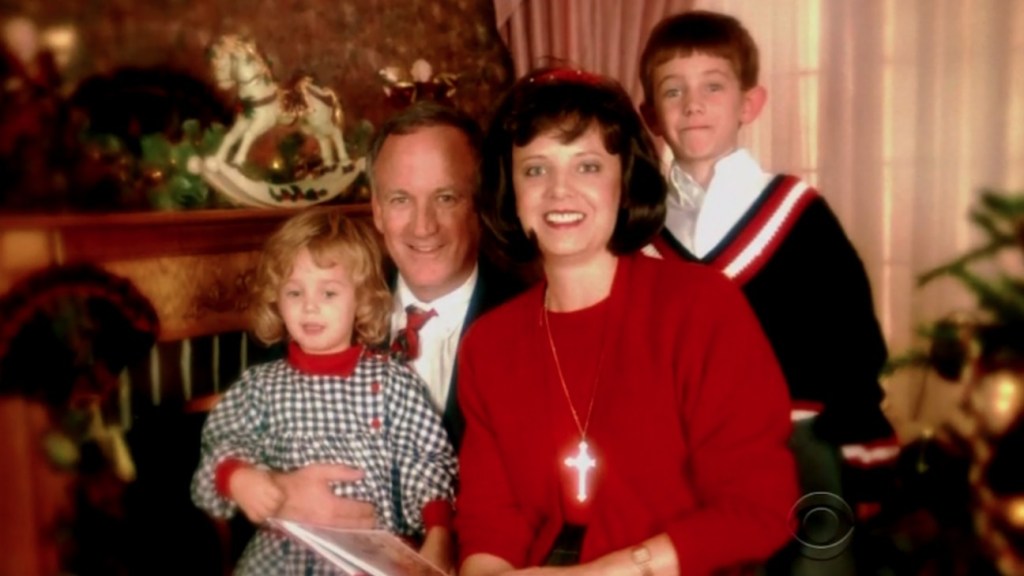
The Ramsey family had spent Christmas Day celebrating with friends before returning home to Boulder, Colorado. By all appearances, they represented the image of upper-middle-class American success.
John Ramsey was a successful businessman. Patsy Ramsey was a former beauty queen. Their six-year-old daughter, JonBenét, had become locally known for competing in child beauty pageants.
Sometime during the night, everything changed.
At 5:52 a.m., Patsy Ramsey called 911 to report her daughter missing and stated she had found a ransom note demanding $118,000 for JonBenét’s safe return (CNN, n.d.).
That note would become one of the most controversial pieces of evidence in modern criminal history. Investigators noted that the ransom amount closely matched John Ramsey’s recent bonus, and that the three-page handwritten note appeared unusually long and possibly written inside the home using materials already there (Boulder Police Department, n.d.).
From a criminal justice perspective, behavioral inconsistencies in the note have long been analyzed as atypical of most kidnapping cases, which usually prioritize speed and minimal exposure (National Institute of Justice, n.d.).
Around 1 p.m., after police had already spent hours inside the home, John Ramsey discovered JonBenét’s body in the basement. She had suffered a severe skull fracture and strangulation (Associated Press, n.d.).
At that point, the investigation shifted from kidnapping to homicide.
The House
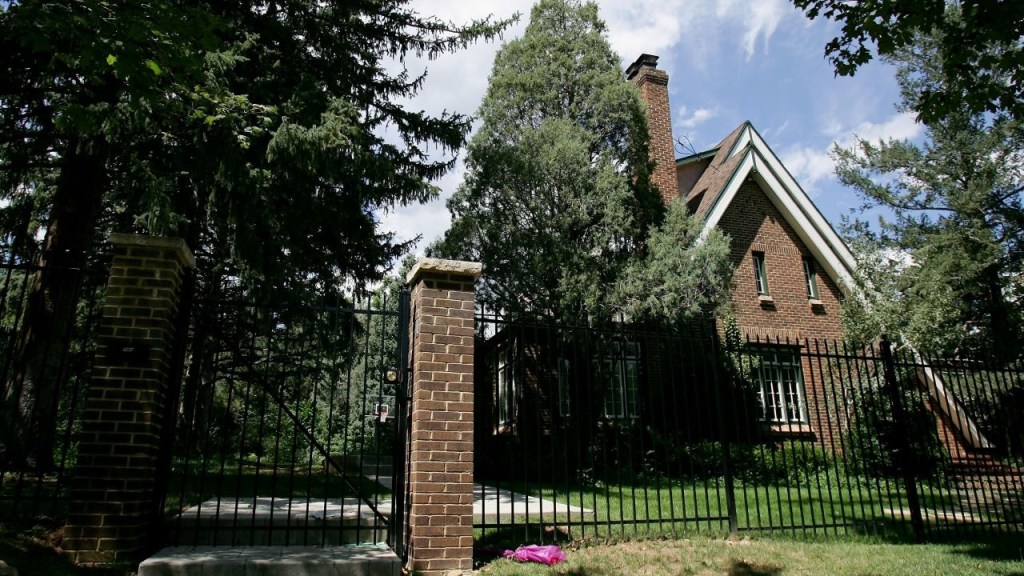
One of the reasons this case still fascinates investigators is because of the crime scene itself.
The Ramsey home was large, multi-leveled, and complex in layout, with a basement that was physically separated from the main living areas (The Denver Post, n.d.).
Multiple sources later reported that the scene was not fully secured in the initial hours of the investigation, and that individuals moved through the home before forensic processing was complete (Boulder Police Department, n.d.).
From a criminal justice standpoint, this case is often used to illustrate how easily crime scene integrity can be compromised during early response failures (National Institute of Justice, n.d.).
Theories, DNA, and Public Obsession
Almost immediately, suspicion turned toward the Ramsey family.
A grand jury later voted to indict John and Patsy Ramsey on charges related to child abuse resulting in death, though the district attorney did not pursue prosecution (CBS News, n.d.).
At the same time, DNA evidence collected from JonBenét’s clothing reportedly did not match the family members and was later cited in arguments supporting an intruder theory (Associated Press, n.d.).
In 2008, then-District Attorney Mary Lacy publicly stated that DNA evidence excluded the Ramsey family from suspicion (ABC News, n.d.).
However, forensic experts continue to debate the interpretation of that DNA, including whether it represents direct involvement, transfer, or contamination (National Institute of Justice, n.d.).
Why I Could Never Let This Case Go
I think when you’re the same age as a victim, something changes psychologically. You stop seeing the case as headlines and start imagining the lived reality.
JonBenét Ramsey became more than a case to the public in the 1990s. She became a symbol of vulnerability, and a reminder that tragedy does not always happen in distant places (People Magazine, n.d.).
This case also became my first real introduction to how media narratives can form before investigations are complete, shaping public perception long before evidence is fully understood (CNN, n.d.).
The Legacy of the Case
Today, the murder of JonBenét Ramsey remains officially unsolved. The Boulder Police Department continues to classify the case as open, and advancements in DNA technology have renewed periodic interest in re-examination (Boulder Police Department, n.d.).

At CrimeCon, I had the opportunity to meet John Ramsey and hear him speak more directly about the ongoing efforts surrounding the case. Hearing him in person added a different layer to something I had previously only understood through records, documentaries, and reports. One of the topics he discussed was the continued interest in advanced DNA testing, including investigative genetic genealogy, which has become a key tool in many modern cold case resolutions.
He mentioned that there has been discussion around additional DNA testing efforts in Colorado, including more advanced forms of analysis that could potentially re-examine evidence with newer technology. According to Ramsey, the estimated cost for this type of testing has been cited as being in the range of around one million dollars, and he stated that he would be willing to help raise the funds if necessary. He also referenced that law enforcement responses have not centered on funding as the primary issue, but rather on broader considerations related to whether and how additional testing should be pursued.
From a criminal justice perspective, this raises a more complex question than it may initially appear. Decisions around advanced forensic testing are not typically based on funding alone, but also on evidentiary standards, chain-of-custody concerns, the condition of remaining physical evidence, and whether new testing methods are likely to produce legally actionable results. In cold cases, agencies such as the Colorado Bureau of Investigation and local jurisdictions often have to weigh the potential investigative value of testing against the risk of consuming limited forensic material that may be degraded or already partially analyzed.
That is where public interpretation and investigative reality often begin to diverge. To outside observers, delays or hesitation can look like resistance. But within the justice system, especially in a case as heavily examined and as evidentially complex as the murder of JonBenét Ramsey, the decision to pursue additional testing is rarely simple, and is usually shaped by a combination of legal thresholds, scientific reliability, and case strategy rather than a single motivating factor.
Still, cases like this naturally invite questions. When a case remains unsolved for decades, every delay or disagreement can feel significant to the public. But from an investigative standpoint, those gaps do not automatically point to intent or concealment they more often reflect the tension between advancing technology, limited physical evidence, and the high burden required to ensure results will actually hold up in court.
The case also continues to be discussed in relation to investigative genetic genealogy, a developing field used to solve cold cases through family DNA matching (Colorado Bureau of Investigation, n.d.).
Cold case work is rarely simple. Evidence degrades, legal thresholds change, and investigative priorities shift over time (National Institute of Justice, n.d.).
And yet, the central question remains unchanged:
What happened inside that house on December 26, 1996?
For me, this case was never just about true crime fascination. It was the case that made me realize how fragile investigations can become when media pressure, forensic uncertainty, and human error collide.
And underneath all of it was still a child who never got the chance to grow up.

Until Every Case Is Solved.
– Ash
If you or anyone you know has any information about this case. You can reach out to the Bolder Colorado Police at 303-441-1974 or email at bouldersmostwanted@bouldercolorado.gov.
If you want to remain anonymous you can call the Northern Colorado Crime Stoppers at 1-800-222-8477


Leave a comment