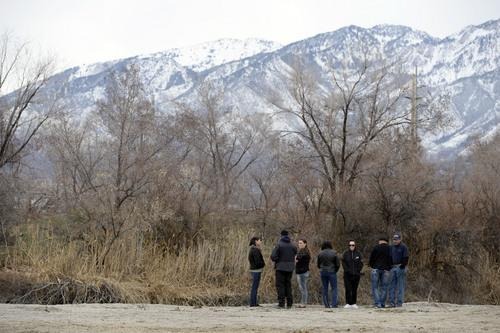
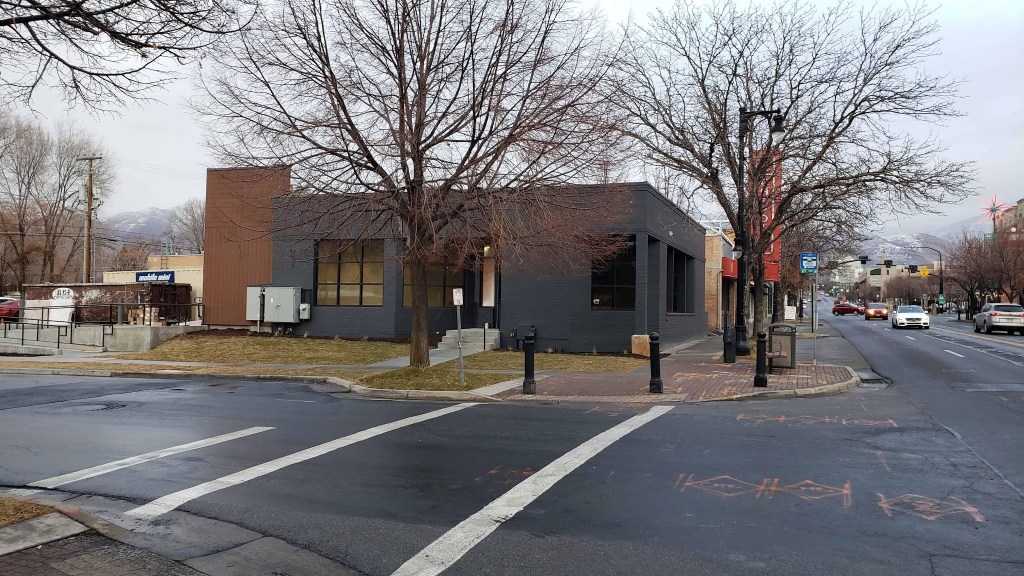
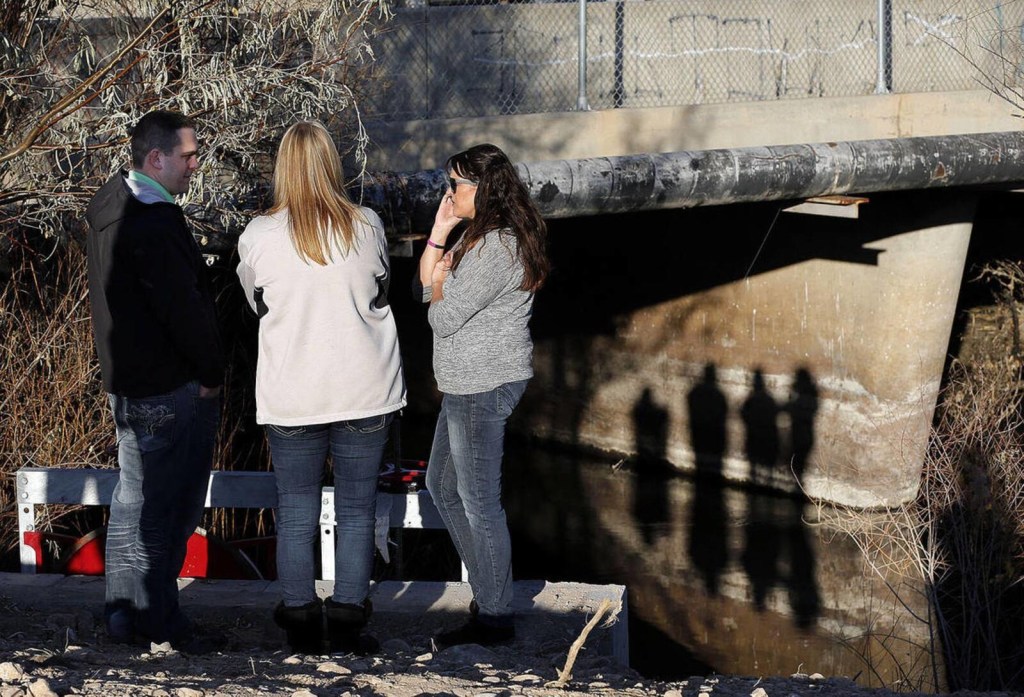
All pictures by SLC Police
The Story of Aletha Jo Williams
By Cold Cases After Dark
Some cases haunt you because of the mystery.
Others stay with you because of the injustice.
But every once in a while, a case becomes personal.
For me, the disappearance of Aletha Jo Williams isn’t just another file tucked away in a cabinet.
It happened in my home state.
I was born and raised in Utah, and like so many Utahns, I’ve driven through Salt Lake City more times than I can count. I’ve traveled roads near West Temple. I’ve crossed bridges over the Jordan River. Knowing that a young pregnant mother vanished from streets that are so familiar makes this case hit differently.
It’s easy to think of cold cases as stories that happen somewhere else.
This one happened at home.
And that makes it impossible to ignore.
A Mother Preparing for a New Beginning
In early 2002, Aletha Jo Williams was only 25 years old.
She was already raising an eight-year-old son and was approximately six months pregnant with her second child. Family members knew her by the nicknames “Ali” and “Ally.”
Like many young mothers, life wasn’t perfect.
But she was still someone’s daughter.
Someone’s sister.
Someone’s friend.
Someone’s mother.
She should have been preparing a nursery—not becoming another missing persons poster.
The Last Time Anyone Saw Aletha
For years, investigators believed Aletha was last seen on March 6, 2002, near the intersection of 1700 South and West Temple in Salt Lake City.
Before disappearing, she stopped at a relative’s home and dropped off some of her belongings.
She told them she would return.
She never did.
Her family eventually reported her missing in May after realizing something was terribly wrong. According to investigators, it was not unusual for Aletha to go periods without contacting relatives, which unfortunately delayed the realization that something far more serious had happened. (DPS – Criminal Identification (BCI))
A Timeline That Became More Complicated
One of the strangest aspects of Aletha’s disappearance is that detectives later questioned whether March 6 was actually the day she vanished.
After reopening the investigation in 2014, Salt Lake City detectives announced they had received information suggesting Aletha may have disappeared months earlier possibly in late 2001 or early 2002.
That revelation dramatically complicated the investigation.
If witnesses couldn’t agree on the last confirmed sighting, reconstructing Aletha’s final movements became exponentially more difficult.
Every uncertainty meant another potential piece of evidence lost forever. (SLCPD)
The Investigation Changes Direction
For nearly twelve years, Aletha’s case remained largely dormant.
Then everything changed.
New witnesses came forward.
Investigators searched portions of the Jordan River.
Search warrants were executed at multiple locations, including a motor home and residences connected to the investigation.
Most importantly, detectives publicly announced that they no longer believed Aletha had simply disappeared.
They believed she had been murdered.
A person of interest had been identified, although investigators initially refused to release that person’s name while they continued building the case. (SLCPD)
A Case Without a Body
Years later, investigators publicly revealed that they believed Michael Vincent was responsible for Aletha’s murder.
According to court documents and witness statements reported by local media, Vincent allegedly made incriminating statements to family members, and investigators developed additional evidence over the years pointing toward his involvement.
Before prosecutors could ever bring the case to trial, Vincent died in 2021 during a separate domestic violence incident.
In 2022, Salt Lake City Police announced that they considered Aletha’s homicide investigation solved.
But there was one heartbreaking problem.
Aletha has never been found.
Her unborn child has never been recovered.
Her family still has no gravesite to visit.
For many families, justice isn’t just identifying the killer.
Justice is bringing their loved one home. (Uncovered)
My Perspective as a Criminal Justice Major
(Opinion – Not Established Fact)
While investigators have identified the person they believe killed Aletha, I think there are still investigative questions that deserve attention.
This section reflects my personal analysis—not established fact.
Theory 1: The Original Crime Scene May Never Have Been Recognized
One aspect of this case that fascinates me is the uncertainty surrounding Aletha’s timeline.
If detectives are correct that she may have disappeared months earlier than originally believed, investigators may have unknowingly lost the opportunity to identify and process the true primary crime scene.
From a Criminal Justice perspective, delayed reporting doesn’t just delay interviews.
It can erase forensic evidence entirely.
That may explain why recovering physical evidence proved so difficult.
Theory 2: The Focus Should Extend Beyond the Killer
One thing we often study in Criminal Justice is offender networks.
While one individual may commit the homicide, disposing of a body without detection often requires opportunity, planning, transportation—or sometimes assistance.
I’m not suggesting anyone knowingly participated in murder.
But I do wonder whether additional people may possess pieces of information they never realized were significant.
Someone may remember a vehicle.
A strange late-night trip.
An unusual request.
Or an offhand comment that made no sense twenty years ago but suddenly does today.
Sometimes solving the final piece of a case depends on witnesses recognizing that seemingly insignificant memories matter.
Theory 3: The Jordan River May Have Overshadowed Other Possibilities
Much public attention centered on searches of the Jordan River.
Those searches were understandable given the information investigators had.
However, from an investigative standpoint, I wonder if the public became so focused on one location that other disposal sites received less attention.
Utah has countless abandoned mines, remote desert areas, construction sites, and mountainous terrain.
If the offender was familiar with Salt Lake County and surrounding areas, there were unfortunately many locations capable of concealing evidence for decades.
Theory 4: Domestic Violence Patterns May Hold Additional Clues
Public records indicate the person investigators believe killed Aletha had a documented history of violence.
As Criminal Justice students learn, violence often escalates rather than appears suddenly.
Understanding an offender’s complete behavioral history—including previous assaults, threats, controlling behavior, and relationships—can sometimes reveal additional witnesses or overlooked evidence connected to earlier crimes.
Studying those patterns isn’t just about understanding one homicide.
It’s about identifying warning signs that may prevent future victims.
Why This Case Hits Home
I’ve written about murders from across the country.
Colorado.
Texas.
Tennessee.
California.
But this one feels different.
Maybe it’s because I know these streets.
Maybe it’s because I know the communities where this happened.
Or maybe it’s because growing up in Utah, we’re often told that violent crime is something that happens somewhere else.
Cases like Aletha’s remind us that evil doesn’t recognize state lines.
Cold cases don’t only belong to big cities or famous investigations.
Sometimes they happen right here at home.
As someone born and raised in Utah and now studying Criminal Justice I feel a responsibility to keep telling stories like Aletha’s.
Because every time her name is spoken, someone who knows something might hear it.
And that one person could finally bring her home.
Remembering Aletha
Aletha Jo Williams wasn’t just a missing person.
She was a young mother.
She was expecting a baby.
She had family waiting for her to come back.
They’ve been waiting for more than two decades.
Although investigators believe they know who took her life, one piece of justice is still missing.
Finding Aletha.
Until that day comes, her story deserves to be remembered—not as a closed file, but as a promise that someone is still looking.
At Cold Cases After Dark, that’s exactly what we’ll continue to do.
Until Every Case is Solved.

Utah BCI
Sources
- Utah Department of Public Safety – Aletha Jo Williams Cold Case
- Salt Lake City Police Department – Missing Persons & 2014 Homicide Update
- KSL-TV coverage (2014)
- ABC4 Utah – The Justice Files series
- The Salt Lake Tribune archives
- The Charley Project
- NamUs


Leave a comment