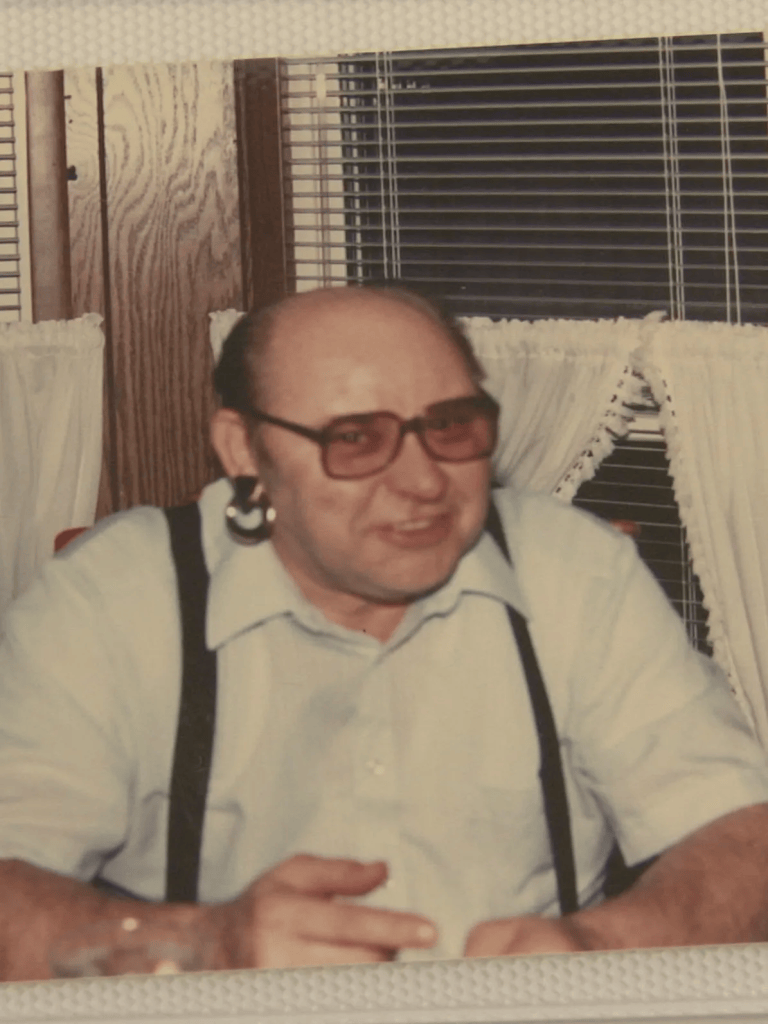
Some anniversaries are remembered with photographs, laughter, and stories passed down through generations.
Others are remembered for entirely different reasons.
For Adolph Czojor and his wife, April 26, 1996, marked thirteen years of marriage. It should have been another milestone in a life they had built together. Instead, it became the beginning of one of Delaware’s most baffling unsolved murder mysteries.
Nearly thirty years later, investigators are still searching for the person responsible.
What makes Adolph’s case so haunting is not only that it remains unsolved, but also the method used to end his life. Unlike many homicide victims, Adolph was not shot, stabbed, or beaten. His killer chose a weapon that leaves almost no visible clues and requires careful planning.
Poison.
According to the Delaware State Police, Adolph spent part of the evening at Delaware Park Racetrack and Casino in Stanton, Delaware. At some point, he suddenly became gravely ill and collapsed inside the casino. To those nearby, it likely appeared to be a medical emergency. Employees and emergency responders rushed to help, but despite every effort, Adolph died shortly afterward.
The answers did not come until the medical examiner completed an autopsy.
The cause of death was cyanide poisoning.
His death was officially ruled a homicide.
That single discovery transformed an apparent medical tragedy into one of the most unusual murder investigations in Delaware history.[1]
The Investigation
Investigators immediately faced a difficult question.
How does someone secretly administer cyanide to another person inside a busy casino filled with employees, security personnel, and hundreds of patrons?
Unlike a firearm or knife, poison often leaves no witnesses to the actual act. Detectives were forced to reconstruct every movement Adolph made during his final hours, searching for the moment when the poison entered his system.
They interviewed witnesses.
They examined his activities before arriving at Delaware Park.
They investigated his relationships, personal life, and business dealings.
Yet despite decades of work, no one has ever been charged with his murder.
The Delaware State Police continue to classify the case as an active homicide investigation and regularly ask the public for information.[2]
Whenever I read cases like this, I cannot help but think about how different homicide investigations looked in 1996.
There were no smartphones recording every interaction.
No social media timelines.
Very few surveillance cameras compared to what exists today.
Digital evidence was almost nonexistent.
If the same crime occurred today, investigators might have access to security footage from dozens of angles, electronic payment records, cell phone location data, text messages, and social media activity.
Back then, detectives relied heavily on interviews, physical evidence, and human memory.
That makes me wonder whether someone noticed something unusual that evening but never realized its importance.
Sometimes the smallest detail becomes the missing piece decades later.
One brief conversation.
A shared drink.
A stranger standing nearby.
A receipt.
A seemingly harmless interaction.
Cold cases are often solved because someone finally remembers what once seemed insignificant.
For Adolph’s family, the years have continued to pass without the answers they deserve.
Every anniversary is no longer simply a celebration of marriage.
It is also a reminder of the day everything changed.
Justice delayed is still justice worth pursuing.
Someone knows why Adolph Czojor never made it home that night.
The question is whether that person will ever decide to tell the truth.
My Thoughts as a Criminal Justice Major
Everything in this section reflects my personal opinions based on publicly available information. These are theories only and should not be interpreted as established fact.
Theory One: A Crime That Required Planning
The use of cyanide immediately tells me this was probably not an impulsive act. Cyanide is not a weapon someone typically has available during a spontaneous argument. From a criminal justice perspective, I believe investigators would carefully examine whether the offender had prior knowledge of toxic substances or access through employment, education, or hobbies.
Theory Two: The Casino May Have Been Chosen Intentionally
I also wonder if Delaware Park itself was selected because it provided anonymity. Casinos are designed to attract large crowds. People are focused on gaming, dining, and entertainment rather than paying attention to strangers around them. If someone intended to poison another person without drawing attention, a busy public environment could provide unexpected cover.
Theory Three: The Poisoning May Have Happened Earlier
Another possibility is that the poisoning did not actually occur inside the casino. Depending on the amount administered and the timing, it is worth considering whether Adolph consumed the poison somewhere else before arriving. If that happened, investigators would need to reconstruct not only his time at Delaware Park but every interaction during the hours leading up to his collapse.
Theory Four: Modern Forensics Could Reveal New Evidence
One investigative avenue I hope continues to receive attention is forensic reexamination. Advances in toxicology, DNA recovery, fingerprint enhancement, and trace evidence analysis have solved many cold cases once believed impossible. Physical evidence preserved from 1996 may reveal information today that investigators simply could not detect when the crime occurred.
Theory Five: Someone Has Lived With This Secret
Finally, I believe someone has carried this secret for nearly three decades. Whether it is the offender, someone who unknowingly helped afterward, or someone who heard an admission years ago, many cold cases are ultimately solved because relationships change. Fear fades. Loyalties shift. Consciences become heavier with time. Sometimes justice arrives because one person finally decides they cannot stay silent any longer.
Why This Case Still Matters
Adolph Czojor’s murder reminds us that not every homicide is violent in the way people expect.
Some murders happen quietly.
Some leave almost no visible evidence.
Some require investigators to solve a puzzle that grows more difficult with each passing year.
But no matter how much time has passed, Adolph’s family deserves answers.
Someone knows how cyanide found its way into his life that evening.
Someone knows why a husband celebrating his anniversary never returned home.
Until those answers are found, Adolph Czojor’s story deserves to be remembered.
Because every victim deserves justice, and every family deserves the truth.
References
- Delaware State Police. Adolph Czojor Cold Case Bulletin. https://dsp.delaware.gov/wp-content/uploads/sites/118/2022/07/Czojor-Adolph-update.pdf
- Delaware State Police. Unsolved Homicide Cases. https://dsp.delaware.gov/homicide-unsolved-cases/
- Delaware Online / The News Journal. Coverage of the Adolph Czojor cyanide poisoning investigation and anniversary reporting.
- True Red Crime Podcast. Delaware’s Strangest Murder Mystery: Adolph Czojor. Episode discussing publicly available investigative information and media coverage.


Leave a comment