There are some places that should only be remembered for their beauty.
The Elliott Highway in Alaska is one of them.
Stretching through the wilderness north of Fairbanks, it is a road surrounded by towering trees, mountains, and endless miles of quiet. Travelers drive it hoping to experience Alaska’s rugged landscape.
But on Memorial Day in 1972, that peaceful highway became the setting for one of Fairbanks’ most disturbing unsolved murders.
A group of sightseers made a discovery no one should ever have to make.
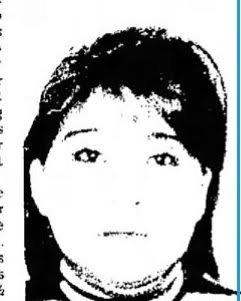
Lying below an embankment near Mile 34½ was the body of a young woman.
She was only twenty four years old.
Her name was Alice Ann Baldwin.
More than fifty years later, her killer has never been identified.
A Brutal Crime That Shocked Alaska
According to the Fairbanks Daily News Miner, Alice’s body was discovered on May 29, 1972, after it had been discarded over an embankment along the Elliott Highway. Investigators determined she had been shot three times in the head and had suffered multiple stab wounds to her body. The violence inflicted upon her suggested this was not simply a homicide. It was an intensely personal and brutal attack. (1)
Almost immediately, Alaska State Troopers launched one of the largest homicide investigations Fairbanks had seen at the time.
Seven Fairbanks investigators worked the case full time.
Four additional detectives from Anchorage were assigned to assist.
Within weeks, investigators had already logged more than 1,100 detective hours attempting to solve Alice’s murder. (1)
Despite those extraordinary efforts, the person responsible remained unidentified.
The Search for Two Men
One detail that stood out in the newspaper coverage was that investigators believed two unidentified men may have had information about Alice’s death.
The Fairbanks Daily News Miner published a composite sketch of one of those men and appealed to the public for help identifying him.
Investigators also asked anyone who had driven the Elliott Highway on May 28 or May 29 to contact authorities if they had seen anything unusual.
The newspaper’s Secret Witness program even offered reward money for information leading to an arrest and conviction, along with an additional reward for information about Alice’s whereabouts during the days before she was killed.
According to investigators, Alice had last been known to be living somewhere beginning around May 16, and detectives were working to reconstruct her final two weeks alive. (1)
Even then, investigators understood something that still holds true today.
Someone had seen something.
Someone knew where Alice had been.
Someone knew who she had been with.
The challenge was convincing them to come forward.
A Case That Refuses to Be Forgotten
Reading about Alice’s case today feels different than reading modern homicide investigations.
In 1972 there were no cell phones.
No GPS.
No surveillance cameras covering every intersection.
No social media accounts documenting a person’s movements.
Investigators relied almost entirely on interviews, physical evidence, and the memories of witnesses.
Every conversation mattered.
Every tip mattered.
Every witness had the potential to become the key to solving the case.
Looking back from today’s perspective, it is impossible not to wonder how differently this investigation might unfold with modern forensic science.
Technology has transformed homicide investigations.
DNA analysis.
Genetic genealogy.
Advanced fingerprint recovery.
Digital mapping.
Even bullets recovered decades ago can sometimes reveal new information using modern ballistic databases.
Cases once considered impossible have been solved because science caught up with the evidence.
That gives me hope for Alice.
My Thoughts as a Criminal Justice Major
Everything in this section reflects my personal opinions based on publicly available information. These theories should not be interpreted as established fact.
Theory One
The sheer level of violence immediately makes me wonder whether investigators considered that Alice may have known the person responsible. Multiple gunshot wounds combined with numerous stab wounds often suggest intense emotion, personal anger, or an effort to ensure the victim did not survive. While stranger homicides certainly occur, this level of violence can sometimes indicate a relationship between victim and offender.
Theory Two
The newspaper mentions investigators searching for two unidentified men. I wonder whether those individuals were witnesses, acquaintances, or possible suspects whose identities were never fully established. With today’s facial comparison technology and digital archives, it may be worth revisiting that composite sketch using modern investigative techniques.
Theory Three
The location where Alice’s body was found also raises important questions. The Elliott Highway was isolated even in 1972. Choosing that location may indicate the offender had previous knowledge of the area, whether through work, hunting, construction, or frequent travel. Geographic familiarity often plays a significant role in homicide investigations involving body disposal.
Theory Four
Another aspect I would revisit is Alice’s known movements beginning around May 16. Detectives were clearly interested in identifying where she had been living during those final days. Reconstructing those relationships today using archived records, employment information, and surviving witness interviews might reveal connections that were overlooked decades ago.
Theory Five
Finally, I believe this case could still be solved through a combination of modern forensic science and renewed public awareness. Families talk. Friends grow older. Secrets become more difficult to keep. Someone who remained silent in 1972 may no longer feel obligated to protect the truth. One conversation could finally give Alice’s family the answers they have waited more than half a century to hear.
Why Alice’s Story Still Matters
Alice Ann Baldwin was only twenty four years old.
She had an entire future ahead of her.
Instead, her life ended beside a lonely highway, and her family was left with decades of unanswered questions.
More than fifty years have passed.
Investigators have changed.
Technology has changed.
The world has changed.
But one thing has not.
Someone still knows who killed Alice Baldwin.
Until that truth is uncovered, her story deserves to be remembered.
Every cold case is more than an unsolved investigation.
It is a family still waiting for justice.
UNTIL EVERY CASE IS SOLVED.
References
- Fairbanks Daily News Miner. “Police Hunt for Suspect in Alice Baldwin Death.” June 1972. Newspapers.com. https://www.newspapers.com/article/fairbanks-daily-news-miner-police-hunt-f/134878300/
- Alaska Department of Public Safety. Alaska State Troopers historical homicide investigations and cold case resources.
- Fairbanks Daily News Miner. Archived coverage of the Alice Ann Baldwin homicide investigation, May and June 1972.
- University of Alaska Fairbanks. Oral history and historical archives documenting major criminal investigations in Interior Alaska.
 Cold Cases After Dark
Leave a comment