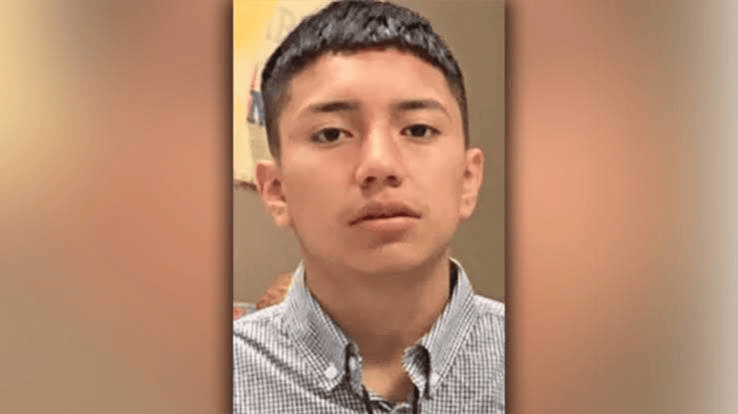
Seventeen.
At seventeen, life is supposed to be opening up. There should be high school memories being made, plans for the future, friendships, family, first jobs, first cars, and all the uncertainty that comes with figuring out who you are going to become.
For Amilcar Martinez, all of that was taken away in the span of a few seconds.
On September 2, 2022, Amilcar was riding as a passenger inside an SUV traveling west on Washington Avenue in Knoxville, Tennessee. As the SUV stopped at a red light near the intersection of Washington Avenue and Winona Street, another vehicle approached from behind.
Then someone opened fire.
Amilcar was struck by gunfire and was pronounced dead at the scene.
He was only 17 years old.
And four years later, his family is still waiting for answers.
A Night That Changed Everything
According to investigators, Amilcar was inside the SUV when another vehicle pulled behind it at the traffic light. The occupants of that vehicle allegedly opened fire before fleeing the area.
What happened next is the part of the story that is painfully familiar in so many unsolved shootings.
Police arrive.
A young person is dead.
There is a crime scene to process.
There are witnesses to locate.
There is evidence to collect.
And somewhere out there, investigators believe, are people who know what happened.
But knowing something and being willing to tell law enforcement are two very different things.
The Knoxville Police Department continues to list Amilcar’s homicide among its unsolved murder cases. The department’s current listing identifies the location as the 1400 block of Washington Avenue and states that the investigation remains ongoing.
Three years after Amilcar’s death, investigators were still asking the public for information. Local reporting in September 2025 stated that no suspects had been arrested or charged in connection with his murder.
Think about that for a moment.
Three years.
And now another year has passed.
Still no arrest.
Still no trial.
Still no courtroom where someone has to answer for what happened to a 17-year-old kid.
The Passenger
One detail in this case stands out to me immediately.
Amilcar was reportedly the passenger in the SUV.
That raises an important investigative question:
Was Amilcar the intended target?
Or was he simply in the wrong place at the wrong time?
Those are two very different possibilities.
If the shooter specifically targeted the SUV, investigators would need to determine whether the shooter knew who was inside. Was the vehicle followed? Was someone inside the SUV being watched before the shooting? Did the shooter know the driver or one of the passengers?
Or was this a confrontation that escalated into gunfire?
We simply don’t know.
And that’s where the unanswered questions become so important.
My Criminal Justice Perspective
As a Criminal Justice major, one of the things I have learned is that investigators have to separate what they know from what they believe.
That distinction is incredibly important in cold cases.
So I want to make something clear.
The following are my personal theories, not accusations against any particular person.
Theory #1: Amilcar May Not Have Been the Intended Target
This is one of the possibilities I would examine first.
If the shooter was targeting someone inside that SUV, Amilcar could have been an unintended victim.
The fact that he was a passenger makes me want to know everything investigators can establish about the other occupants.
Who was driving?
Who else was inside?
Did anyone have known conflicts?
Was anyone recently threatened?
Were there arguments, disputes, or altercations?
Did anyone have a reason to believe someone was looking for them?
Those questions could potentially help determine whether this was a targeted attack or something more random.
Theory #2: Someone Knew the Shooter
Another possibility I would investigate is whether the shooter had some connection to someone inside the SUV.
The circumstances described by investigators suggest the other vehicle approached from behind while the SUV was stopped at a red light.
That makes me wonder whether this was an opportunity-based shooting or whether the SUV was deliberately followed.
If someone was following that vehicle, investigators would want to know where the SUV had been immediately before the shooting.
Where did it come from?
Did anyone notice another vehicle behind them?
Were there surveillance cameras along the route?
Were there businesses, residences, traffic cameras, or other sources of video that could have captured the vehicles before or after the shooting?
Even if video doesn’t clearly identify a shooter, establishing a vehicle’s movements can sometimes become incredibly valuable.
Theory #3: Someone Knows More Than They Have Said
This is perhaps the theory I come back to most often in unsolved shootings.
Someone may know something.
That doesn’t necessarily mean someone witnessed the murder itself.
It could mean someone heard a conversation.
Someone may have seen the vehicle.
Someone may know who suddenly disappeared from the neighborhood afterward.
Someone may have heard someone bragging.
Someone may have been told what happened.
And sometimes people remain silent because they are afraid.
Fear of retaliation is real.
So is loyalty.
So is the belief that talking to police makes you a “snitch.”
But silence doesn’t bring Amilcar back.
And silence doesn’t give his family the answers they deserve.
The Evidence Question
From a criminal justice perspective, another thing I would be interested in is the physical evidence collected from the scene.
Ballistics could potentially be extremely important in a shooting like this.
Were shell casings recovered?
Was a specific firearm identified?
Could the firearm potentially be connected to another shooting?
Was there usable surveillance footage?
Were fingerprints or DNA recovered from the SUV?
Were phones examined?
Were cell-site records available?
Was the vehicle that the shooter occupied ever identified?
And perhaps most importantly:
Has any piece of evidence been reexamined as technology has improved?
Cold cases sometimes benefit from time because technology changes.
DNA analysis improves.
Digital evidence becomes more sophisticated.
Video enhancement techniques improve.
Ballistic databases expand.
Old evidence can sometimes tell investigators something that it couldn’t tell them years earlier.
That is why I believe an unsolved case should never automatically be considered a forgotten case.
Four Years Later
The Knoxville Police Department continues to list Amilcar Martinez among its open homicide investigations.
And that matters.
Because when we talk about cold cases, it is easy for the public to assume that nothing is happening.
Sometimes there are leads that simply cannot be publicly discussed.
Sometimes investigators are waiting for additional evidence.
Sometimes witnesses are reluctant.
Sometimes the person responsible has managed to stay completely under the radar.
And sometimes the smallest piece of information can change everything.
Amilcar’s case is not just a line on a homicide list.
It is the story of a 17-year-old who should have had decades ahead of him.
Instead, his life ended at a Knoxville intersection.
Someone Knows
There is something I always think about when writing these cases.
The person responsible for Amilcar’s death has had years to live with what they did.
They have had birthdays.
They have watched seasons change.
They have probably gone to work, spent time with friends, celebrated holidays and continued living their life.
Meanwhile, Amilcar’s family has had to live with an entirely different reality.
A reality where September 2, 2022, will always be the day everything changed.
That isn’t justice.
And it isn’t closure.
Amilcar deserves both.
If you know something about the murder of Amilcar Martinez, even if you believe the information is insignificant, please tell investigators.
The Knoxville Police Department’s Homicide Unit can be reached at 865-215-7317. Anonymous tips can also be provided to East Tennessee Valley Crime Stoppers at 865-215-7165.
You don’t have to solve the case yourself.
You don’t have to know every detail.
You just have to be willing to tell someone what you know.
Because sometimes the difference between an unsolved case and an arrest is one person finally deciding to speak.


Leave a comment