Aaron Anthony Breaux, known to the people who loved him as Antone, was only 19 years old when his life was taken by gun violence in Fremont, California.
He was young, creative, and full of personality. He had dreams for his future, including plans to attend Job Corps in Utah and, one day, open his own custom classic car shop.
He had a family who loved him. He had interests he wanted to pursue. He had an entire life ahead of him.
But on the evening of April 29, 2007, two gunshots changed everything.
Aaron was found gravely wounded in an apartment complex parking lot near Fremont Boulevard. Despite the efforts that followed, he did not survive.
Nearly two decades later, the person or people responsible for his murder have not been brought to justice.
Someone knows what happened that night.
And Aaron deserves for the truth to come out.
The cases may be cold. The questions are still burning.
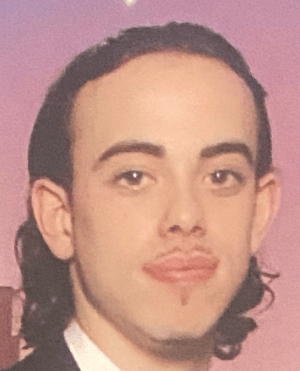
WHO WAS AARON ANTHONY BREAUX?
Before we talk about the crime, I want to talk about Aaron.
Because I think one of the biggest problems with cold cases is how easily a person can become reduced to a name, a photograph, a date, and a few lines on a police website.
But Aaron was so much more than a homicide victim.
According to his obituary, Aaron was born on September 18, 1987, in Hayward, California. He spent his early childhood there with his mother and brother before moving to Fremont with his mother and stepfather.
He attended Washington High School and was preparing to leave for Job Corps in Utah, where he had recently enrolled. [1]
Think about that for a moment.
At 19, Aaron was looking toward his future. He was preparing to take a step toward building a life for himself.
And he had a very specific dream.
Aaron loved old cars. He enjoyed attending car shows and building small car models. His ambition was to one day own a custom classic car shop.
I love that detail because it gives us a glimpse of the person behind the case.
Aaron wasn’t just thinking about tomorrow. He was imagining the kind of life he wanted to build.
His obituary also described someone who loved his family and could make people laugh. His grandmother, Brigitte Breaux, described him to the San Francisco Chronicle as a loving and creative young man. [2]
His mother, Debra Florez, later remembered him as kindhearted and full of life. She described how his presence could make people smile and laugh.
Those are the memories his family carries.
Not just the night he was killed, but the young man he was before that night.
THE NIGHT OF APRIL 29, 2007
Sunday, April 29, 2007, should have been an ordinary evening in Fremont.
At approximately 8:53 p.m., Aaron was found suffering from a life threatening gunshot wound in the parking lot of an apartment complex in the 3800 block of Fremont Boulevard, according to the Fremont Police Department. [3]
He was 19 years old.
The circumstances surrounding the shooting were frighteningly brief in the public record.
During the initial investigation, witnesses told police they had heard two gunshots near the apartment complex. However, they did not report seeing suspicious vehicles or people connected to the shooting. [3]
Two gunshots.
A young man critically wounded.
And no publicly identified shooter.
That is where the story of Aaron’s murder begins, but it is also where so many of the questions begin.
Who fired those shots?
Was Aaron approached by someone he knew?
Did an argument take place?
Was he targeted deliberately?
Did the shooter arrive at the scene with a plan, or did something happen that escalated into violence?
The available public information does not answer those questions.
What we do know is that Aaron died from a gunshot wound and that his killing remains an unsolved homicide.
A CRIME SCENE WITH TOO FEW ANSWERS
When investigators respond to a shooting, every detail matters.
The location of the victim. The positions of physical evidence. The direction from which shots were fired. The possible presence of witnesses. Any nearby cameras. The movements of people entering or leaving the area.
Sometimes a case is solved because someone provides a name.
Sometimes it is solved because forensic evidence connects a suspect to a crime.
And sometimes it takes a combination of both.
In Aaron’s case, witnesses reportedly heard two gunshots but did not see a suspicious person or vehicle. [3]
That does not mean nobody saw anything useful.
A witness might have heard a voice, noticed someone walking away, seen a vehicle earlier in the evening, or remembered an interaction that seemed unimportant at the time.
It is also possible that someone has information they have never shared with investigators.
We cannot know which of these possibilities is true from the public record.
But the absence of an identified shooter does not mean there are no answers left to find.
It means investigators still need evidence that can establish what happened and who was responsible.
THE INVESTIGATION AND THE PASSAGE OF TIME
In the immediate aftermath of Aaron’s murder, investigators followed leads and received phone calls. Over the years, police identified and interviewed people of interest, but the case remained unsolved.
In 2022, Fremont Police publicly renewed their appeal for information to mark the fifteenth anniversary of Aaron’s murder. The department’s Cold Case Homicide Division hoped that bringing renewed attention to the case would encourage someone to come forward. [3]
The reward was increased to $60,000.
That total included a $50,000 reward announced by California Governor Arnold Schwarzenegger in 2008 and an additional $10,000 contributed by Aaron’s family. The reward was offered for information leading to the arrest and conviction of those responsible. [3]
I think it is important that Aaron’s case received renewed attention after so many years.
Cold cases can be difficult because time changes people’s lives. Witnesses move away. Memories fade. People who once knew something may become reluctant to speak, or they may assume the police have already heard everything they know.
But an unsolved case is not the same as a case without hope.
Evidence can be reviewed. Old interviews can be reconsidered. New witnesses can emerge. Advances in forensic science can sometimes provide opportunities that did not exist when a crime first occurred.
The question is whether there is still information out there that can help investigators connect the pieces.
A MOTHER’S UNIMAGINABLE LOSS
One of the most heartbreaking parts of this case is hearing Aaron’s mother describe the years following his death.
In a statement released by Fremont Police in 2022, Debra Florez explained how devastating it had been to lose her son.
She described the experience of hearing that her son had died as something that shattered her world, leaving pain and desperation that continued long after the shooting. She remembered Aaron as kindhearted, full of life, and someone whose presence could brighten a room. [3]
As I read about cases like this, I think about how a homicide does not end when the crime scene is cleared.
The victim’s family continues living with the consequences.
Birthdays come and go.
Holidays arrive.
Families gather, but someone is missing.
There are milestones Aaron never got to experience. There are conversations his mother will never get to have with him. There are plans that will never become reality.
And there is the additional pain of not knowing who was responsible.
For a family, justice is not simply a legal outcome. It can also mean finally understanding what happened to someone they loved.
Aaron’s family deserves answers.
MY CRIMINAL JUSTICE PERSPECTIVE
Now I want to put on my Criminal Justice Major hat.
The following are my personal theories and investigative questions, based only on the publicly available information. They are not established facts, and I am not accusing any individual of committing this crime.
I believe it is important to explore possibilities while remembering that a theory is not proof. Any conclusion must ultimately be supported by evidence.
Theory One: Was Aaron specifically targeted?
This is one of the first questions I would want investigators to examine.
Was Aaron the intended target, or did he become involved in a situation that unexpectedly turned violent?
Those are two very different possibilities.
If the shooting was targeted, understanding Aaron’s relationships and circumstances in the weeks leading up to his death could be important.
I would want investigators to review his known social connections, recent disagreements, communications, and any information about threats or conflicts.
I would also want to understand whether Aaron had any reason to expect trouble that evening.
That does not mean assuming he was involved in anything wrong. Victimology is about understanding a person’s life and circumstances so investigators can identify possible investigative leads.
The question is whether Aaron’s murder was connected to a specific relationship or dispute, or whether the motive lies somewhere else entirely.
Theory Two: Someone may have known Aaron’s movements
Another question I would ask is whether the shooter knew where Aaron would be that evening.
If someone deliberately sought him out, investigators would want to establish how that person knew where to find him.
Was the location somewhere Aaron regularly visited?
Was he meeting someone?
Did someone know he would be in the parking lot?
Or was the encounter unexpected?
I would want investigators to reconstruct Aaron’s movements before the shooting and establish who had seen or communicated with him that day.
A timeline could help determine whether the shooter may have been waiting for him or encountered him by chance.
At the same time, I would not assume that the location alone proves planning. A shooting can occur in a familiar place without having been arranged in advance.
The evidence would need to establish which explanation fits.
Theory Three: The witnesses who heard the gunshots may be more important than we realize
According to Fremont Police, witnesses heard two gunshots but did not see suspicious people or vehicles. [3]
I would want investigators to examine those accounts again, if they have not already done so.
Hearing gunshots does not necessarily mean someone had a clear view of the shooter. But a witness may still remember details that could help establish a timeline.
How far away were they?
Did they hear the shots close together?
Did they hear anyone shouting?
Did they hear footsteps or a vehicle afterward?
Did they see anyone in the area before the shooting?
Could they describe the direction from which the sounds came?
These questions might not identify a suspect on their own. But when combined with other evidence, small details can help investigators narrow down possibilities.
I would also want investigators to consider whether anyone who was initially unavailable or unwilling to speak might now be prepared to provide information.
Theory Four: Reexamine the physical evidence with fresh eyes
This is an area I would consider especially important in a cold case.
I would want investigators to review the original evidence inventory and determine what physical evidence was collected, what testing was performed, and whether any items could benefit from additional examination.
If shell casings or bullets were recovered, a modern review of the ballistic evidence could be useful.
If biological or trace evidence was preserved, investigators could determine whether additional testing is possible.
I would also want a careful review of the original scene photographs, diagrams, witness statements, and investigative reports.
The goal would not be to assume that earlier investigators made mistakes. It would be to identify whether any questions remain unanswered and whether today’s forensic capabilities could help answer them.
Not every case contains testable DNA or evidence that can be matched to a particular person. But a systematic review can help establish what is possible.
Theory Five: The answer may come from someone who has stayed silent
This is a possibility I think deserves attention in nearly every unsolved homicide.
The person who eventually provides the critical information may not be the person who committed the crime.
They could be someone who witnessed an interaction, heard a conversation, learned something afterward, or recognized a detail they did not initially understand.
They may have been afraid to speak at the time.
They may have believed that too much time had passed.
They may have assumed someone else had already contacted police.
We cannot know whether that is true in Aaron’s case. But I would continue to make it clear that investigators are willing to hear from anyone with relevant information.
Sometimes the breakthrough is not a dramatic forensic discovery.
Sometimes it is a person finally deciding to tell the truth.
WHAT I WOULD WANT INVESTIGATORS TO ASK TODAY
If I were reviewing Aaron’s case from a criminal justice perspective, I would focus on a few central questions:
- What is the most complete timeline of Aaron’s final day? Establishing his movements and contacts could help investigators understand the circumstances surrounding the shooting.
- What evidence was recovered at the scene? A detailed review could determine whether additional forensic analysis is possible.
- What did the original witnesses hear or observe? Reexamining their accounts could reveal details that were overlooked or not considered important at the time.
- What information did investigators learn from the people they interviewed? A review of previous leads could help identify inconsistencies, unanswered questions, or opportunities for follow up.
- Is there someone who has not yet shared what they know? Public appeals can reach people who were not previously aware of the case or who have only recently become willing to speak.
These questions do not assume a particular motive or suspect. They focus on evidence, timelines, and the possibility of developing new leads.
That is where I believe a responsible review of a cold case should begin.
A DREAM THAT NEVER GOT THE CHANCE TO BECOME REALITY
I keep coming back to Aaron’s dream of owning a custom classic car shop.
He loved old cars. He went to car shows. He built small car models. He was preparing to attend Job Corps in Utah and take steps toward his future. [1]
He had something he wanted to build.
Something he wanted to become.
And at 19, he had so much time ahead of him to figure it all out.
Instead, his life ended in a parking lot in Fremont.
His family was left to grieve, and the person or people responsible have not been brought to justice.
I think about the life Aaron might have lived if he had been given the chance. Maybe he would have opened that shop. Maybe he would have built a collection of classic cars. Maybe he would have found another dream along the way.
We will never know.
But we can make sure that his story is not reduced to the circumstances of his death.
Aaron was a son, a brother, a grandson, and a young man with plans for his future.
He deserves to be remembered for the life he lived, not only for the way it ended.
SOMEONE KNOWS SOMETHING
More than nineteen years have passed since Aaron was killed.
The passage of time can make an investigation more difficult, but it does not make the questions any less important.
Someone may remember hearing the gunshots.
Someone may have seen a person in the area.
Someone may have heard a conversation before or after the shooting.
Someone may know something they have never shared with investigators.
And that person may be reading about Aaron’s case right now.
If you have information, even if you are unsure whether it matters, please consider contacting law enforcement.
You do not have to know the whole story. You do not have to solve the case yourself.
You only have to share what you know.
JUSTICE FOR AARON ANTHONY BREAUX
Fremont Police continue to list Aaron’s murder as an unsolved cold case. The department has asked anyone with information to contact its Cold Case Homicide Detective at 510 790 6900 or email coldcasedetective@fremont.gov.
Anonymous tips can be submitted by calling the Silent Witness Hotline at 510 494 4856, or by texting TIP FREMONTPD followed by your message to 888 777. The department’s case page lists a $60,000 reward for information leading to an arrest and conviction. Please confirm the current reward terms directly with Fremont Police before relying on them. [3]
Aaron’s family has already endured years of grief and unanswered questions.
He should not be remembered only as a young man whose life was taken by gun violence. He should be remembered as Antone, the creative, kindhearted young man who loved his family, dreamed of working with classic cars, and had a future he never got to experience.
His story is still waiting for an answer.
His family still deserves justice.
Until Every Case is Solved.
The cases may be cold. The questions are still burning.
Sources
1. Legacy.com. Aaron Anthony Breaux Obituary (2007). East Bay Times obituary archive.
https://www.legacy.com/us/obituaries/eastbaytimes/name/aaron-breaux-obituary?id=6768463
2. Lee, H. K. (2007, April 30). Man shot, killed in Fremont’s second homicide of 2007. San Francisco Chronicle.
https://www.sfchronicle.com/bayarea/article/Man-shot-killed-in-Fremont-s-second-homicide-of-2562680.php
3. Fremont Police Department. Aaron Anthony Breaux: 2007 Cold Case Homicide.
https://www.fremontpolice.gov/community/cold-case-files/aaron-anthony-breaux
4. CBS San Francisco. (2022, June 6). $60,000 reward offered in 2007 cold case murder of Aaron Anthony Breaux.
https://www.cbsnews.com/sanfrancisco/news/60000-reward-offered-in-2007-cold-case-murder-of-aaron-anthony-breaux/
5. KTVU FOX 2. (2022, June 6). $60K reward offered in 2007 slaying of 19-year-old in Fremont.
https://www.ktvu.com/news/60k-reward-offered-in-2007-slaying-of-19-year-old-in-fremont


Leave a Reply