Every June, rainbow flags begin to appear across cities, storefronts, and social media feeds as Pride Month begins. For many people, Pride is celebration. It is community. It is resilience after generations of being told to hide.
But for others in the LGBTQIA+ community, Pride is also remembrance.
As an openly gay person, cases involving members of the LGBTQIA+ community hit close to home for me. Especially the cases that remain unsolved. There is something deeply unsettling about knowing how many LGBTQIA+ individuals are still targeted simply for existing openly in today’s world.
Hate crimes against the LGBTQIA+ community continue to happen across the United States every single year. Despite progress in visibility and rights, violence fueled by hatred, prejudice, and fear remains a terrifying reality for many queer individuals. People are assaulted, threatened, harassed, and murdered because of who they are or who they love.
But within that violence, the transgender community is disproportionately affected.
Transgender women, especially Black transgender women, continue to face some of the highest rates of deadly violence in the country. Many are attacked simply for living openly and authentically. Some cases barely receive media attention. Others are investigated poorly, forgotten quickly, or remain unsolved for years.
Too often, transgender victims are denied dignity even after death. They are misgendered in reports, overlooked by media outlets, and treated as statistics instead of human beings whose lives mattered.
And that is part of why the story of Marsha P. Johnson still matters so deeply today.
Because long before Pride became corporate sponsorships, rainbow logos, and massive parades, Marsha was fighting to survive in a world that treated people like her as disposable.
And decades after her death, there are still unanswered questions surrounding how she died.
Some people become symbols after they die.
Marsha P. Johnson became one while she was still alive.
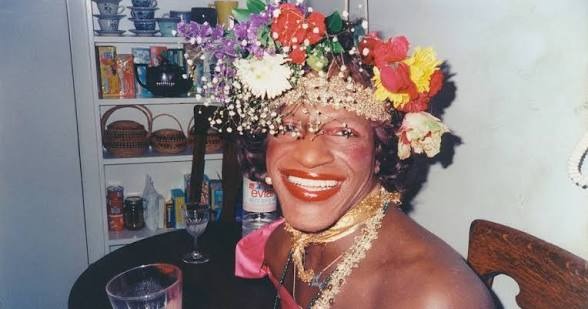
Before her name appeared in documentaries, history books, and Pride celebrations, Marsha was simply trying to survive in a world that often treated people like her as disposable. She was loud when society demanded silence. Compassionate in places filled with cruelty. Fearless in moments where most people would have every reason to be afraid.
And decades after her death, one question still lingers in the shadows:
What really happened to Marsha P. Johnson?
A Life Lived Without Apology
Marsha P. Johnson was born on August 24, 1945, in Elizabeth. Assigned male at birth as Malcolm Michaels Jr., she grew up during a time when being openly queer or gender nonconforming could cost someone their family, job, safety, or life.
After high school, she moved to New York City with little money but a determination to finally live authentically. It was there she adopted the name Marsha P. Johnson. According to Marsha, the “P” stood for “Pay It No Mind,” a phrase she often used when questioned about her identity. It became more than a saying. It became a shield against a society constantly trying to define her.
New York in the 1960s was not the city many people imagine today. LGBTQ+ individuals were frequently harassed, arrested, and brutalized by police. Gay bars were raided regularly. People could lose their homes or jobs simply for existing openly. Stonewall Inn became one of the few places where marginalized people could gather, especially transgender individuals, drag queens, homeless queer youth, and people rejected by mainstream society.
But tension had been building for years.
Police raids had become routine. Violence against the LGBTQ+ community was largely ignored. Many people lived in constant fear. Then, in the early morning hours of June 28, 1969, something changed.
When police raided the Stonewall Inn yet again, the people inside fought back.
Marsha P. Johnson became one of the most recognized figures associated with the Stonewall Riots, a historic turning point that helped ignite the modern LGBTQ+ rights movement. Whether she arrived during the uprising or shortly after has been debated by historians, but what cannot be debated is her role as an activist in the movement that followed.
The next year, she participated in the first Gay Pride march in New York City in 1970.
Marsha did not fight only for visibility. She fought for survival. For dignity. For people society wanted erased.
The Final Days of Marsha P. Johnson
On June 26, 1992, Marsha publicly revealed that she had been living with HIV for two years. At the time, fear and stigma surrounding HIV/AIDS were still rampant. Violence, discrimination, and abandonment were tragically common for people diagnosed with the virus.
Just days later, Marsha’s body was discovered floating in the Hudson River near the Christopher Street piers.
Police quickly ruled her death a suicide.
But many people close to Marsha immediately challenged that conclusion.
Friends and witnesses claimed Marsha had not appeared suicidal. Some reported hearing that she had been harassed shortly before her death. Others believed she may have been attacked. Despite those concerns, the case was largely dismissed.
Years later, public pressure forced investigators to revisit the case. In 2012, authorities officially changed the cause of death from suicide to “undetermined,” reopening discussions surrounding what really happened that night.
To this day, the case remains unresolved.
A Funeral That Became a Movement
What happened after Marsha’s death says just as much about her life as it does about the mystery surrounding it.
When news spread throughout New York City that Marsha had died, members of the LGBTQ+ community came together in mourning. Activists, friends, drag performers, homeless youth, and members of the queer community gathered to honor someone who had spent her entire life protecting people society often ignored.
Her funeral was not small.
Hundreds of people reportedly attended to pay their respects. For many in attendance, Marsha was more than an activist. She was family. She was a protector. She was someone who fed homeless queer youth, comforted struggling friends, and gave people a sense of belonging in a world that often rejected them.
In death, just like in life, Marsha brought the LGBTQ+ community together.
And for many people, the grief carried another emotion beneath it:
Suspicion.
Because to those who knew her best, the official explanation never felt complete.
Possible Theories Surrounding Marsha’s Death
Because the case was never fully solved, I have personally developed a few theories about what may have happened to Marsha P. Johnson.
One theory I have is that Marsha may have been the victim of a hate crime because she was a Black transgender woman living openly during a time when violence against the LGBTQIA+ community was extremely common and often ignored. Transgender women, especially Black transgender women, faced enormous danger in the early 1990s, and many crimes against them were never properly investigated.
I also believe it is possible that someone close to Marsha may have feared being publicly connected to her. During that time, homosexuality, HIV/AIDS, and relationships involving transgender individuals carried severe stigma. A closeted individual may have panicked at the possibility of exposure and reacted violently in an attempt to silence her.
Another theory I have centers around Marsha publicly revealing only days earlier that she had been living with HIV for two years. Fear and misinformation surrounding HIV/AIDS were widespread at the time, and I think it is possible that a sexual partner may have reacted violently after hearing her announcement, especially if they believed they had unknowingly been exposed.
I also think it is possible that Marsha may have gone on a date or encountered someone who did not initially realize she was transgender. Sadly, violence against transgender women in these situations has happened throughout history and continues to happen today, often fueled by shame, anger, or fear from the other person involved.
Why This Case Still Matters
Marsha P. Johnson is often remembered as a historical figure now, almost larger than life. But behind the activism and symbolism was a real person. Someone who laughed, struggled, cared deeply for others, and deserved protection just like anyone else.
Cold cases are not just mysteries. They are unfinished stories.
And Marsha’s story still feels unfinished.
Maybe the truth disappeared into the darkness surrounding the piers that summer night in 1992. Or maybe it was ignored, overlooked, or dismissed by people who never truly listened.
Either way, her death remains one of the most haunting unsolved cases connected to LGBTQ+ history.
And during Pride Month, while people celebrate how far the LGBTQIA+ community has come, it is also important to remember the people who fought to make that progress possible, especially those whose stories still do not have answers.
Because for many transgender women in America, violence is not history.
It is still happening.
And until every victim receives the dignity, attention, and justice they deserve, these stories matter.
Until every case is solved.
Sources:


Leave a comment