The Disappearance of Heather Elvis
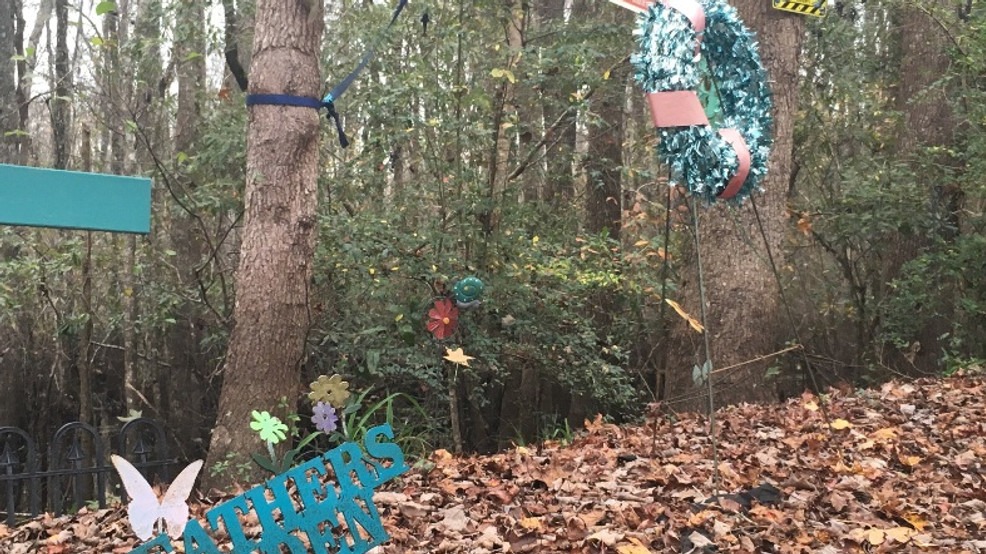
Memorial for Heather Elvis
By Cold Cases After Dark
There is something uniquely haunting about a case where everyone is still waiting for the victim to come home.
No grave.
No final resting place.
No place where a family can leave flowers and know that the person they love is finally there.
Just an empty space where someone used to be.
In December 2013, 20-year-old Heather Elvis was beginning what should have been another chapter of her life. She went on a first date. She laughed. She learned how to drive a stick shift. She even sent her father a photograph from that night.
Hours later, after a series of phone calls in the darkness before dawn, Heather disappeared.
Her car would be found at Peachtree Landing in the Socastee area of Horry County, South Carolina.
Heather was nowhere to be found.
More than a decade later, she still has not been brought home.
A Young Woman With Her Whole Life Ahead of Her
Heather Elvis was only 20 years old when she disappeared.
She lived in the Myrtle Beach area and worked in the restaurant industry. Like many people her age, she was navigating relationships, friendships, work, and the uncertainty that comes with trying to figure out who you are and where your life is going.
Before her disappearance, Heather had been involved in a relationship with an older, married man named Sidney Moorer. According to reporting and evidence later presented during the investigation, that relationship had ended before December 2013.[1][2]
By December, Heather appeared to be moving forward.
On December 17, 2013, she went on a first date with another man. During the date, she sent her father, Terry Elvis, a photograph of herself learning to drive a manual-transmission vehicle in the parking lot of Inlet Square Mall.
Her date later dropped her off at her apartment at approximately 2:00 a.m.[1]
At that moment, there was no obvious reason to believe Heather was about to vanish.
Then the phone calls began.
The Hours Before Heather Disappeared
After returning home, Heather spoke with her roommate, who was away for the Christmas holiday.[1]
During the early morning hours of December 18, Heather and Sidney Moorer were also in communication.[2]
Those final hours would become central to the investigation.
At some point before dawn, Heather left her apartment.
Her car was later discovered at Peachtree Landing, a boat landing in the Socastee area. A Horry County police officer encountered the vehicle at approximately 4:00 a.m.[2]
But Heather was gone.
She has not been seen or heard from since December 18, 2013.[2]
Imagine the silence that followed.
A 20-year-old woman simply disappears.
Her vehicle remains behind.
Her family begins calling.
Friends begin searching.
Hours become days.
Days become weeks.
And eventually, the terrible possibility begins to settle in:
Heather may not be coming home on her own.
Peachtree Landing
Peachtree Landing would become one of the most important locations in the entire investigation.
Heather’s vehicle was there.
Heather was not.
The location immediately raised questions.
Why had she gone there in the middle of the night?
Was she meeting someone?
Did she arrive voluntarily?
Did someone follow her?
Or was Peachtree Landing simply the place where her car was abandoned after something had already happened?
More than a decade later, those questions remain central to the mystery.
One of the most frustrating realities of missing-person investigations is that finding a victim’s vehicle does not necessarily mean investigators have found the primary crime scene.
A car can be evidence.
It can also be misdirection.
The Investigation Turns Toward Sidney and Tammy Moorer
As investigators reconstructed Heather’s final hours, attention eventually focused on Sidney Moorer and his wife, Tammy.
On February 21, 2014, police executed a search warrant at the Moorers’ residence and took both into custody. Days later, authorities announced kidnapping and murder charges related to Heather’s disappearance.[1]
The case, however, would become legally complicated.
In March 2016, the murder charges against Sidney and Tammy Moorer were dropped, while the kidnapping cases remained.[1]
That distinction is important.
Neither Sidney nor Tammy Moorer has been convicted of murdering Heather Elvis.
They were, however, ultimately convicted of kidnapping her.
In October 2018, Tammy Moorer was convicted of kidnapping and conspiracy to commit kidnapping and received concurrent 30-year prison sentences.[1]
Sidney Moorer’s first kidnapping trial ended in a mistrial after the jury could not reach a unanimous verdict. In 2019, during a second trial, he was convicted in connection with Heather’s kidnapping.[3]
Two kidnapping convictions.
One missing young woman.
And still no answer to the question her family has asked for years.
Where is Heather?
The Most Painful Kind of Justice
A conviction can answer a legal question.
It cannot necessarily answer a family’s questions.
Heather’s family still does not know where she is.
They cannot bring her home.
They cannot bury her.
They cannot visit a grave.
In 2023, Heather’s family marked ten years since her disappearance. By then, two people connected to her disappearance had been convicted of kidnapping her, yet Heather herself remained missing.[2][3]
That is what makes this case so painful.
The criminal justice system has established that Heather was kidnapped.
But the final chapter of her story is still missing.
My Perspective as a Criminal Justice Major
The following section represents my personal analysis and opinion. These theories are not established facts and should not be interpreted as accusations against any person beyond what has been proven in court.
Because there have already been kidnapping convictions in Heather’s case, I do not think the most useful theories are simply about who was responsible for her disappearance.
For me, the more important questions are:
How did Heather disappear so completely?
Where did the timeline break?
And where might the missing piece of evidence still exist?
Theory One: Peachtree Landing May Have Been a Transfer Point
One possibility I continue to consider is that Peachtree Landing was not the final destination.
It may have been a transfer point.
From an investigative perspective, an abandoned vehicle can serve several purposes. It can mark the location of an encounter. It can create a false trail. Or it can simply be the location where someone leaves one vehicle and enters another.
If Heather went to Peachtree Landing expecting to meet someone she knew, getting her there may not have required force.
That possibility matters.
The kidnapping could have begun only after she arrived.
If that happened, the most important vehicle in this investigation may not have been Heather’s car.
It may have been the vehicle that left Peachtree Landing.
Theory Two: The Most Important Evidence May Exist in the Missing Minutes
Cold cases often become dominated by the largest pieces of evidence.
The car.
The phone records.
The surveillance footage.
The suspects.
But sometimes the answer exists inside a gap of only a few minutes.
If I were examining this case from a Criminal Justice perspective, I would want Heather’s final hours reconstructed repeatedly in the smallest possible increments.
Who was awake?
Who was driving?
Which businesses were open?
Were there fishermen nearby?
Newspaper carriers?
Delivery drivers?
Night-shift workers?
People driving home from bars or restaurants?
Someone may have seen something important without ever realizing they were witnessing part of Heather’s disappearance.
Sometimes witnesses do not come forward because they do not know they are witnesses.
Theory Three: The Location Where Heather Was Taken May Have Been Familiar Rather Than Far Away
When someone remains missing for years, people often assume the person responsible must have traveled a great distance.
I do not necessarily believe that.
An offender who knows an area extremely well may know places that outsiders—and even organized search teams—would overlook.
Private property.
Wooded areas.
Construction sites.
Waterways.
Abandoned structures.
Places that changed dramatically in the years after 2013.
The better question may not be:
How far could someone have traveled?
It may be:
What location would have felt private, familiar, and safe to the person responsible?
Geographic familiarity can sometimes matter more than geographic distance.
Theory Four: The Changing Landscape Could Hold New Answers
More than a decade has passed since Heather disappeared.
Land changes.
Buildings are demolished.
Properties are sold.
Trees are cleared.
Roads are expanded.
Water levels change.
Construction reshapes entire areas.
From a modern cold-case perspective, I would be interested in comparing historical satellite imagery and property records from December 2013 with the landscape today.
Were there locations that were inaccessible then but accessible now?
Were properties connected to people in the investigation later developed or sold?
Did construction expose areas that had never been thoroughly searched?
Sometimes time destroys evidence.
But sometimes time exposes it.
Theory Five: Someone May Know Only One Small Piece of the Story
This is one of the most important possibilities in almost every long-term missing-person investigation.
Someone may not know where Heather is.
They may not know exactly what happened.
They may not even realize that what they remember matters.
Maybe someone remembers a strange conversation.
An unexplained absence.
A vehicle being cleaned.
Clothing being discarded.
A sudden change in behavior.
An unusual trip.
A comment made years later.
People sometimes remain silent because they believe:
“I don’t know enough.”
But investigations are built from fragments.
One person’s seemingly insignificant memory may fit perfectly with evidence that investigators have never released publicly.
Theory Six: The Missing Evidence May Be Digital Evidence That Did Not Seem Important in 2013
Technology has changed dramatically since Heather disappeared.
In 2013, investigators had access to cell-phone records and surveillance footage, but today’s digital-forensic capabilities are far more advanced.
I wonder whether old devices, archived accounts, cloud backups, photographs, location metadata, or communications preserved somewhere outside the original investigation could still contain useful information.
The question may not be whether evidence existed.
The question may be whether investigators had the technology—or legal access—to fully understand it at the time.
Cold cases sometimes change when old evidence meets new technology.
A Life Frozen at Twenty
Heather Elvis was 20 years old when she disappeared.
Her photographs will always show the same young woman.
But the world around those photographs has continued moving.
Her family has grown older.
Friends have built careers.
People have married.
Children have been born.
Birthdays have passed.
Christmases have come and gone.
Heather should have been growing older too.
That is something I think we sometimes forget when discussing missing-person cases.
The person in the photograph remains frozen in time.
The people who love them do not.
Bring Heather Home
The legal system has already produced convictions connected to Heather’s kidnapping.[1][3]
But this case is not finished.
Not while Heather remains missing.
A prison sentence cannot replace a daughter.
A conviction cannot provide a gravesite.
And a courtroom verdict cannot answer the question her family still wakes up with every day:
Where is Heather?
Somewhere, the final piece of this story still exists.
Maybe it exists in a place that has never been searched.
Maybe it exists in evidence that deserves to be examined again.
Maybe it exists in the memory of someone who has spent years convincing themselves that what they know is not important.
Or maybe someone knows exactly what happened.
If so, they have carried that truth long enough.
Heather Elvis deserves to be found.
Her family deserves to bring her home.
And at Cold Cases After Dark, we will continue telling these stories because the passage of time should never determine whether a victim is worth remembering.
Heather is still missing.
Heather still matters.
And her story is not over.
Until every case is solved.
References
[1] WMBF News Staff. (2017, December 6). Timeline of events in the Heather Elvis case. WMBF News.
[2] WMBF News Staff. (2023, December 18). Family marks 10 years since Heather Elvis’ disappearance. WMBF News.
[3] Merriman, K., & Dickerson, B. (2019, December 27). Year in review: Second trial ends in conviction for Sidney Moorer in Heather Elvis’ disappearance. WMBF News.


Leave a comment