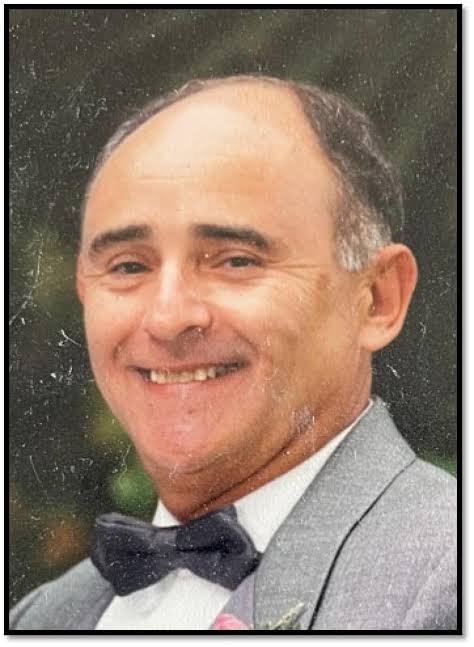
On August 11, 1993, investigators were called to a home in unincorporated Costa Mesa, California. Inside, they discovered 61-year-old Alan Jay Schwalbe dead from multiple stab wounds.
There were signs of a struggle. Yet investigators found no evidence of forced entry, and the home did not appear to have been ransacked.
Someone had killed Alan inside his own home. But who had entered that home, what had happened before the attack, and why had his life been taken?
Those questions have followed this case for decades.
Alan was a real estate investor, a former teacher, and an outspoken gay rights advocate who had been involved in civil rights and Democratic organizations. His life was complicated, and his history included a criminal conviction that was reported by the Los Angeles Times in 1993. Those facts are part of the historical record, but they do not explain who killed him or establish a motive for his murder.
More than 30 years later, investigators have continued to seek information that could finally bring answers to this case.
This is the story of Alan Jay Schwalbe, the circumstances surrounding his death, and the unanswered questions that remain.
Who Was Alan Jay Schwalbe?
Alan Schwalbe was 61 years old when he was killed. He had worked as a teacher in Orange County schools and later became a real estate investor and landlord, owning properties in several Southern California counties.
But his public life extended beyond education and real estate.
According to contemporary reporting by the Los Angeles Times, Alan was involved with various Democratic and LGBTQ organizations. He served on the board of the Fair Housing Council of Orange County from 1975 to 1985 and was known among fellow activists for supporting gay rights and fair housing.
People who knew him described him as someone who cared about human rights and equal treatment in housing. Friends and colleagues remembered his involvement in community organizations and his willingness to support causes important to him. <Cite refs={[“turn533408search3″,”turn533408search6”]} />
Alan’s history also included a serious criminal conviction. The Los Angeles Times reported that in 1974 he was convicted on 11 counts of child molestation involving teenage students and was sentenced to six months in jail. He resigned from teaching that year. This is a documented part of his history and should not be omitted from a complete account of his life.
At the same time, it is important to distinguish that conviction from the separate investigation into his murder. The available public reporting does not establish that the conviction was connected to his death.
A person’s life can contain difficult and contradictory facts. Reporting those facts accurately does not require us to assume that we know how or why that person was killed.
August 11, 1993: A Murder Inside the Home
On Wednesday, August 11, 1993, Orange County Sheriff’s Department deputies responded to the 300 block of 22nd Street in unincorporated Costa Mesa.
Alan was found stabbed to death inside his home. Contemporary reporting stated that his body was discovered by one of his two roommates. An autopsy confirmed that he had suffered multiple stab wounds to the upper body. <Cite refs={[“turn533408search3″,”turn533408search0”]} />
Details from the scene raised immediate questions.
Investigators reported signs of a struggle, suggesting that some form of confrontation may have taken place. However, there were no signs of forced entry, and the residence did not appear to have been ransacked. <Cite refs={[“turn533408search0″,”turn533408search7”]} />
Those findings left investigators with several possibilities to consider.
Had Alan opened the door to someone he knew? Had someone entered without needing to force their way inside? Or had the circumstances of the attack left evidence that investigators could not fully interpret?
The public record does not answer those questions.
In an August 1993 Los Angeles Times report, a sheriff’s lieutenant declined to discuss certain details, explaining that investigators did not want to disclose information because of the status of the case. <Cite refs={[“turn533408search3″,”turn533408search6”]} />
That kind of caution can be important in a homicide investigation. Details withheld from the public may help detectives assess statements from witnesses or evaluate whether a person has genuine knowledge of the crime.
But as the years passed without a publicly announced resolution, the questions surrounding Alan’s death remained.
The Investigation That Would Not Give Up
The Orange County Sheriff’s Department investigated Alan’s murder and revisited the case over the years. Despite those efforts, the investigation remained unresolved.
According to the department’s December 2022 announcement, investigators had collected and examined DNA and other forensic evidence over the years, but that work had not publicly identified a suspect or established a motive.
In 2022, detectives again reviewed the case and resubmitted several pieces of evidence for additional forensic testing. Investigators hoped newer technology might reveal information that earlier methods could not detect. At the time of the announcement, the results of that additional analysis were still pending. <Cite refs={[“turn533408search0″,”turn533408search7”]} />
The department also emphasized another important reality of cold cases: people and relationships change over time.
Someone who was reluctant to speak in 1993 might be willing to come forward years later. A friendship may have ended. A personal conflict may no longer carry the same pressure. Someone who once feared the consequences of speaking may now feel able to tell investigators what they remember.
That does not mean a witness necessarily knows who committed a crime. It means investigators must remain open to information that was unavailable or undisclosed during the original investigation.
In a case with physical evidence already collected, a renewed review can also provide an opportunity to reconsider old assumptions and determine whether new testing could help clarify what happened.
A $50,000 Reward Renewed in 2026
In March 2024, California Governor Gavin Newsom announced a $50,000 reward for information leading to an arrest and conviction in Alan’s murder. The reward was intended to encourage anyone with relevant information to come forward. <Cite refs={[“turn533408search2″,”turn533408search4”]} />
On April 24, 2026, the governor’s office announced that it was reissuing rewards in several unsolved cases, including Alan Schwalbe’s homicide. The state’s official announcement again listed a $50,000 reward and provided contact information for the Orange County Sheriff’s Department. <Cite refs={[“turn533408search5”]} />
The renewed reward is significant because it keeps public attention on a case that has remained unresolved for decades. It also gives people who may have information another reason to consider contacting investigators.
A reward does not guarantee a breakthrough, and it does not tell us what investigators currently know. But it makes clear that authorities continue to seek information capable of advancing the case.
Someone may remember a conversation, an unexplained absence, a detail about that day, or something they heard years ago. Even if a person once believed the information was unimportant, it may be worth sharing with detectives now.
My Criminal Justice Perspective: What Questions Deserve Another Look?
As someone with a Criminal Justice background, I believe cold cases require a careful balance between examining possibilities and respecting the limits of the evidence. The following are investigative questions, not established explanations for Alan’s murder.
1. Did the killer know Alan?
The absence of apparent forced entry is one of the most notable details released by investigators. It raises the question of whether the person responsible was known to Alan or was able to enter without forcing a door or window.
However, the absence of forced entry does not prove that the killer was an acquaintance. There may be several explanations for how someone entered the home, and the available public information does not establish which explanation is correct.
I would want investigators to review any surviving evidence concerning entry points, the home’s layout, and the timeline of who was present or had access.
2. What can the evidence from the struggle reveal?
Investigators reported signs of a struggle. A detailed review of the original scene documentation could help clarify what was disturbed, where the confrontation may have occurred, and whether the physical evidence supports a particular sequence of events.
That review would need to remain grounded in the original forensic record. It would be inappropriate to infer a specific argument, relationship, or motive solely from the fact that a struggle occurred.
3. Was the motive personal, financial, or something else?
In its 2022 reporting, the Daily Pilot quoted an Orange County Sheriff’s Department spokesperson discussing several possible explanations, including a robbery gone wrong, someone with a personal relationship to Alan, or someone opposed to his views. Investigators emphasized that they did not know which, if any, explained the killing. <Cite refs={[“turn533408search7”]} />
These possibilities illustrate why motive can be difficult to establish in a cold case.
A financial motive would need to be supported by evidence of theft, financial disputes, or other relevant circumstances. A personal motive would require evidence connecting a relationship or conflict to the crime. A bias-related motive would require evidence supporting that possibility, not merely the fact that Alan was a gay rights activist.
I would not select one of these explanations as the answer without evidence that distinguishes it from the others.
4. Could modern forensic testing provide a breakthrough?
The Sheriff’s Department confirmed in 2022 that evidence had been resubmitted for additional testing. That is one of the most concrete avenues for renewed investigation documented in the public record. <Cite refs={[“turn533408search0”]} />
The important question is whether newer analysis has produced usable results and, if so, whether those results can be connected to a person or independently corroborated.
I did not find a reliable public update confirming the outcome of that testing. The absence of a public update does not establish that testing failed or that investigators have made no progress.
5. Is there someone who knows more than they have shared?
This is a possibility in many long-unsolved cases, but it should not be treated as proof that a particular person is withholding information.
Someone may have witnessed an event, heard a statement, or learned something indirectly. Others may have information they did not understand to be relevant at the time.
Investigators would need to assess any new information against the physical evidence and the known timeline. A tip is a lead to evaluate, not automatically proof of guilt.
What We Still Do Not Know
Despite the renewed attention, several important questions remain unanswered in the public record.
Who killed Alan Schwalbe? What was the motive? How did the person enter the home without obvious forced entry? What exactly happened during the struggle? And have the more recent forensic examinations produced any leads that investigators can pursue?
These are not questions that responsible reporting can answer through speculation.
The Orange County Sheriff’s Department has not publicly established a motive in the sources reviewed for this article, and I found no reliable report confirming that anyone has been charged with Alan’s murder.
The fact that investigators have revisited the case and that the state has renewed its reward provides a reason to keep the case visible. It does not allow us to claim that a particular theory is correct.
The next meaningful development will have to come from evidence, a credible witness, or information that allows investigators to establish what happened.
Someone May Know Something
Alan’s murder remains a reminder that the passage of time does not necessarily eliminate the possibility of answers.
The Orange County Sheriff’s Department has continued to seek information, and California’s renewed reward offers another opportunity for someone with relevant knowledge to come forward.
If you have information about Alan Jay Schwalbe’s murder, contact:
Orange County Sheriff’s Department, Cold Case Detail
- Phone: 714-647-7046
- Email: coldcase@ocsheriff.gov
These contacts are listed in the California Governor’s Office announcement dated April 24, 2026. <Cite refs={[“turn533408search5”]} />
You do not need to know whether your information will solve the case before sharing it with investigators. A detail that seemed insignificant decades ago may be worth reviewing today.
Until Every Case is Solved
Alan Jay Schwalbe was killed inside his home on August 11, 1993. More than three decades later, the circumstances of his death remain unresolved in the public record.
His life and history were complicated, but the unanswered question at the center of this investigation remains straightforward: who killed him, and what evidence will finally establish the truth?
Forensic technology has advanced. Memories and relationships have changed. The reward has been renewed. Whether the next breakthrough comes from physical evidence or a person finally deciding to speak, the case deserves careful attention grounded in facts.
The cases may be cold. The questions are still burning.
Until Every Case is Solved.
Sources and Further Reading
- Orange County Sheriff’s Department. “Investigations Seeking Person of Interest in 1993 Cold Case.” December 29, 2022.
https://ocsheriff.gov/news/investigations-seeking-person-interest-1993-cold-case - Los Angeles Times. Eric Young. “Deputies Identify Landlord Found Stabbed to Death.” August 13, 1993.
https://www.latimes.com/archives/la-xpm-1993-08-13-me-23517-story.html - Los Angeles Times. Jodi Wilgoren. “Investor and Gay Activist Is Slain in Home.” August 14, 1993.
https://www.latimes.com/archives/la-xpm-1993-08-14-me-23732-story.html - Los Angeles Times / Daily Pilot. Eric Licas. “Investigators Reexamining 1993 Cold Case Homicide in Unincorporated Costa Mesa.” December 30, 2022.
https://www.latimes.com/socal/daily-pilot/news/story/2022-12-30/investigators-reexamining-1993-cold-case-homicide-in-unincorporated-costa-mesa - Los Angeles Times / Daily Pilot. Sara Cardine. “Governor’s Office Offers $50K Reward for Information in 1993 Costa Mesa Homicide.” March 29, 2024.
https://www.latimes.com/socal/daily-pilot/news/story/2024-03-29/governors-office-offers-50k-reward-for-information-in-1993-costa-mesa-homicide - Governor of California. “Governor Newsom Reissues $50,000 Rewards to Crack Cold Cases, Deliver Justice for Victims.” April 24, 2026.
https://www.gov.ca.gov/2026/04/24/governor-newsom-reissues-50000-rewards-to-crack-cold-cases-deliver-justice-for-victim


Leave a Reply