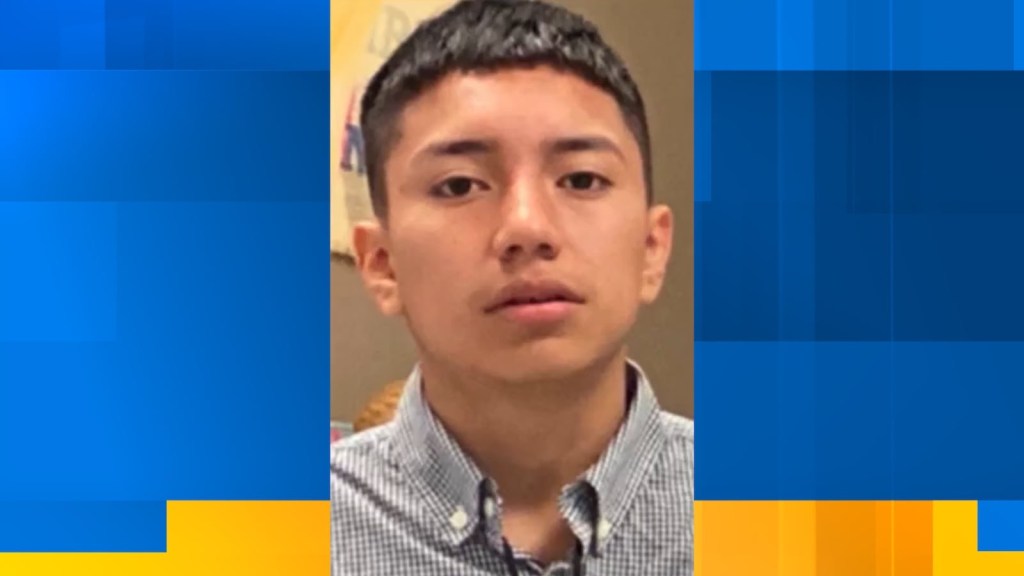
Seventeen years old. An ordinary September afternoon in Knoxville, Tennessee, became the last day of Amilcar Martinez’s life. He was riding in an SUV when another vehicle approached and gunfire erupted. Within moments, a young life was gone, a family was left grieving, and investigators were faced with questions that have remained unanswered.
Amilcar was killed on September 2, 2022, near Washington Avenue and Winona Street in Knoxville. Three years later, the case remained unsolved, with no suspects publicly reported as arrested or charged in connection with his murder.
For Amilcar’s family, the passage of time cannot erase what happened that day. And for those of us who follow unsolved cases, his story is another reminder that when a homicide remains unresolved, the questions do not simply disappear. They remain with the people who loved the victim, the investigators who continue to seek answers, and a community that deserves to know what happened.
The Day Everything Changed
On Friday, September 2, 2022, at approximately 4:30 p.m., Knoxville police officers responded to a shooting in the 1400 block of Washington Avenue. Officers found a gunshot victim inside an SUV. The young man was pronounced dead at the scene.
The victim was initially identified publicly as a 17-year-old male because of his age. Authorities later identified him as Amilcar Martinez.
Investigators determined that Amilcar was a passenger in the SUV, which was traveling west on Washington Avenue. As the vehicle stopped at a red light, another car reportedly pulled up behind it, and someone inside opened fire. Amilcar suffered fatal gunshot wounds.
The occupants of the SUV had been sharing a vehicle on a public road. In an instant, that ordinary moment turned into a homicide investigation.
The occupants who survived were left with an experience that may have been difficult to process, while Amilcar’s loved ones faced a loss that no family should have to endure. The available information does not establish why the shooter opened fire, whether Amilcar was specifically targeted, or what connection, if any, existed between the people in the two vehicles.
Those unanswered questions are at the heart of this case.
A Crime Scene With Witnesses, but No Arrests
One of the most important details in Amilcar’s case is that the shooting happened in the middle of the afternoon, at an intersection where other people may have been nearby.
Investigators reported locating multiple witnesses at the scene and began questioning them. The vehicle carrying the shooter or shooters was described as a car of undetermined make and model, and those responsible fled. No suspects had been publicly identified or arrested in the initial investigation.
The presence of witnesses could be significant in a case like this. Investigators may have been able to gather descriptions of the suspect vehicle, statements about the moments leading up to the shooting, and information about how the vehicle approached and left the scene.
However, the existence of witnesses does not necessarily mean that someone could clearly identify the shooter. A sudden shooting can unfold in seconds. People may be frightened, distracted, or focused on getting themselves and others to safety.
Investigators also have to distinguish between what witnesses actually observed and what they believe they saw or heard afterward.
That distinction matters. Even when multiple people are present, the information they provide may be incomplete, inconsistent, or difficult to corroborate.
The publicly available information does not explain precisely what each witness saw, whether anyone was able to identify the suspect vehicle, or whether investigators recovered evidence that could identify the shooter. Those details remain important unknowns.
Three Years Later, the Questions Remained
By September 2, 2025, three years had passed since Amilcar was killed. The case remained unresolved, and investigators were still seeking information from the public.
Three years is a long time for a family to live without knowing who was responsible for taking their loved one’s life.
As the years pass, memories can become harder to recall. People move away. Phone numbers change. Relationships end. Someone who once knew a small but important detail might not realize that the information matters until they hear about the case again.
That is why renewed public attention can be valuable. A person who was reluctant to speak in 2022 may be willing to come forward now. Someone who heard a conversation, noticed a vehicle, or learned something after the shooting may have information that investigators have never received.
An unsolved case is not necessarily a case without evidence. It is a case in which the available evidence has not yet resulted in a resolution.
And for Amilcar, that resolution is still needed.
My Theories as a Criminal Justice Major
When I look at Amilcar Martinez’s case from a criminal justice perspective, I keep coming back to one central question: Was Amilcar the intended target, or was he killed because of something involving someone else?
I want to be clear that these are my own analytical theories, not official conclusions. The publicly available information does not establish a motive, identify a suspect, or confirm why the shooting happened. I do not want to assign blame to anyone without evidence.
Still, there are several investigative possibilities worth considering.
Theory One: The Shooter Was Targeting Someone in the SUV
My first theory is that the shooter may have intended to target someone inside the SUV.
Investigators reported that another vehicle pulled up behind the SUV while it was stopped at a red light and that someone opened fire. That sequence raises the possibility of a deliberate attack rather than a random encounter.
If the shooter deliberately approached the SUV before firing, investigators would need to examine whether the driver or any of the passengers had previous conflicts, threats, disputes, or other connections that might explain the attack.
That does not mean any occupant was involved in wrongdoing. Being present in a vehicle does not make someone responsible for the violence directed at it.
The key investigative question would be whether the shooter knew who was inside.
If the attack was targeted, the intended victim might have been Amilcar, another occupant, or even someone the shooter mistakenly believed was in the vehicle. Those are different possibilities, and each would lead investigators toward different lines of inquiry.
I would want to know whether investigators identified any prior threats or conflicts involving the occupants and whether those details could be independently corroborated.
What would support this theory? Evidence of prior threats, communications, a documented dispute, or other reliable information connecting the shooter to a particular occupant.
What would weaken it? Evidence suggesting the shooting was unrelated to the occupants’ identities or that the vehicle was attacked for another reason.
At this point, there is not enough publicly available evidence to determine whether Amilcar was specifically targeted.
Theory Two: The Shooter May Have Known Someone in the Vehicle
My second theory is that the shooting could have stemmed from a personal conflict or an existing connection between the shooter and someone inside the SUV.
In some homicide investigations, the people involved may have known one another before the crime occurred. A dispute can escalate, or someone may seek retaliation for a perceived grievance. But investigators must establish those connections through evidence rather than assume they exist.
The reported approach from behind the SUV is a detail I would want investigators to examine closely. Did the other vehicle follow the SUV for any distance, or did it simply arrive at the intersection? Did the shooter appear to recognize the occupants? Was there any interaction before the gunfire?
The publicly available information does not answer those questions.
As a criminal justice major, I would be interested in whether investigators examined communications, social connections, known disputes, and the movements of the involved vehicles before the shooting. Any such examination would need to follow appropriate legal procedures and be supported by reliable evidence.
I would also want to know whether the occupants had recently been threatened or had witnessed anything that might have made them targets.
But I would not assume that a personal dispute existed simply because the shooting may have been deliberate.
What would support this theory? Corroborated evidence of a prior relationship, a specific threat, or a conflict that could be connected to the attack.
What would weaken it? Evidence showing no meaningful connection between the shooter and the occupants, or a different explanation supported by the investigation.
The possibility deserves examination, but it remains a theory.
Theory Three: The Suspect Vehicle Is a Critical Piece of the Puzzle
My third theory focuses less on motive and more on the vehicle used in the shooting.
The shooter or shooters reportedly fled in another car, and the initial description did not establish its make or model.
From an investigative standpoint, the vehicle could be one of the most important leads.
I would want to know whether nearby surveillance cameras captured the SUV before the shooting, the suspect vehicle approaching the intersection, or either vehicle leaving the area. Depending on what footage existed and whether it was preserved, investigators might have been able to establish a direction of travel, identify distinguishing features, or trace the vehicle’s movements.
I would also want to know whether investigators received information about vehicles that were damaged, repaired, repainted, or otherwise altered around the time of the homicide. Such information would only be meaningful if it could be connected to the shooting through independent evidence.
Other potential investigative avenues could include physical evidence recovered at the scene, forensic examination, and any available video or witness accounts that could corroborate a vehicle description.
None of this means those avenues were overlooked. The publicly available information simply does not provide enough detail to determine which methods were used or what results they produced.
What would support this theory? A reliable vehicle identification, video footage, forensic evidence, or witness information that connects a particular vehicle or person to the shooting.
What would weaken it? Evidence showing that a suspected vehicle was unrelated to the crime or that a different vehicle was involved.
For me, this is a reminder that a vehicle can be more than a means of escape. It can become a crucial piece of evidence that connects a suspect to a crime scene.
Theory Four: Someone May Know More Than They Have Shared
My final theory concerns the possibility that someone has information about the shooting that investigators have not yet received.
I want to be careful with this point. Suggesting that someone may know something is not the same as accusing anyone of participating in the crime or deliberately withholding evidence.
People can hesitate to speak for many reasons. They may fear retaliation, worry about becoming involved in a criminal investigation, believe their information is insignificant, or simply not realize what they witnessed.
Someone might remember a conversation, recognize a vehicle, or recall a detail that seemed unimportant at the time. That information could become more meaningful when combined with other evidence.
Because the shooting occurred in the afternoon and investigators reported locating multiple witnesses, I would be interested in whether everyone who might have had relevant information was identified and interviewed, and whether any new witnesses came forward in the years that followed.
I would also want to know whether investigators have received new tips since the case received renewed public attention in September 2025.
What would support this theory? A credible new witness, corroborated information from someone with relevant knowledge, or a tip that leads investigators to independently verifiable evidence.
What would weaken it? There is no straightforward way to rule out the possibility that additional information exists, but investigators would still need to evaluate each tip on its own merits.
Ultimately, I believe the public should be reminded that even a seemingly minor detail can matter. Someone does not need to know the entire story to provide information that helps investigators move forward.
What Investigators Still Need to Establish
For Amilcar’s case to move toward a resolution, several fundamental questions need answers.
Who was responsible for the shooting?
Was Amilcar the intended target, or was someone else inside the SUV the intended victim?
What was the motive, if any, behind the attack?
Can the suspect vehicle be identified and connected to a particular person?
Did physical evidence, surveillance footage, or witness statements provide leads that could be developed further?
Has anyone come forward with information that could be corroborated through additional investigation?
These questions are not claims about what happened. They are the kinds of issues that could help clarify the crime and establish who was responsible.
I also believe it is important to recognize the difference between information that police have not released and information that police do not possess. Investigators may have evidence that has never been made public, particularly when releasing it could compromise an investigation.
Without access to the case file, I cannot know what evidence exists, what leads have been exhausted, or why the case remains unresolved.
What I can say is that the lack of a publicly identified suspect does not diminish the importance of continuing to seek answers.
Amilcar Martinez Deserves to Be Remembered
When a teenager is killed, it is easy for the story to become reduced to a date, an intersection, and a police report.
But Amilcar Martinez was more than the circumstances of his death.
He was seventeen years old. He was at an age when so much of life should still have been ahead of him. There should have been opportunities to grow, change, discover new interests, build relationships, and make plans for the future.
Instead, his life was cut short by gunfire, and his homicide remains unresolved.
I wish there were more publicly available information about Amilcar’s life beyond the circumstances of his death. I do not want to invent details about his personality, his interests, or his dreams. His story deserves to be told accurately, and his identity should never be reduced to speculation about the crime.
His loved ones have had to live with a loss that cannot be undone. No investigation can give them back the future he should have had. But identifying the person responsible could provide answers and bring a measure of accountability.
That is why cases like Amilcar’s matter.
An unsolved homicide is not just an open file. It is a life lost, a family affected, and a community still waiting for answers.
How You Can Help
As of the latest anniversary information available to me, published in September 2025, no suspects had been publicly reported as arrested or charged in connection with Amilcar Martinez’s murder.
If you know anything about the shooting on Washington Avenue on September 2, 2022, even if you believe it is only a small detail, please consider contacting investigators.
Knoxville Police Department Homicide Unit: 865-215-7317
East Tennessee Valley Crime Stoppers: 865-215-7165
Tips to Crime Stoppers can be submitted anonymously. You do not need to solve the case yourself. You only need to share what you know and allow investigators to evaluate it.
If you have information, please do not post unverified accusations against individuals on social media. Provide the information to law enforcement so it can be properly investigated.
Someone may hold a piece of information that could help bring this case closer to a resolution.
Until Every Case Is Solved
Amilcar Martinez was seventeen when his life was taken on a September afternoon in Knoxville. Three years later, the public still had no answer about who was responsible.
I cannot tell you who pulled the trigger. I cannot tell you why Amilcar was killed. And I will not present speculation as fact.
What I can do is keep his name in the conversation, examine the available information carefully, ask the questions that remain unanswered, and encourage anyone with knowledge of the crime to come forward.
Because Amilcar was more than another name on a list of unsolved murders. He was a young person whose life mattered, and his case deserves continued attention until the truth comes to light.
Until Every Case is Solved.


Leave a Reply